- Issued
- 4 November 2024
- Region
This bushfire season, two bushfires threatened Blackdown Tableland National Park and a nearby state forest, prompting a collaborative and prompt response from more than 90 QPWS Rangers, Ghungalu Rangers and integral partners.
Queensland’s sandstone belt is home to national parks and forests full of diverse natural and cultural values we have all come to know and love. Lying on the edge of this is Blackdown Tableland, homeland to the Ghungalu people, whose connection to their traditional country is evident throughout the national park and vivid and visual reminders of their continued connection to this place.
Not unlike much of our beautiful State however, bushfires are an ever-present threat to the vast spaces of protected area we, Traditional Owners and other partners work hard to protect through year-round fire management strategies.

Photo credit: Kim Fleischfresser © Queensland Government
With the Blackdown Tableland area being no stranger to bushfire activity, an intensive planned burn program had already seen this area proactively managed over several years to significantly reduce fuel loads, with the key input of Ghungalu cultural liaisons to best protect the park’s culturally significant sites. Producing a mosaic pattern of burnt and unburnt country across the landscape helped mitigate some of the risk when a second bushfire in two years began encroaching on this estate in October 2024. The size of the fire, its geographic spread and its potential to impact many culturally significant sites across the national park, as well as properties off park, led to the largest bushfire response from Queensland Parks and Wildlife Service (QPWS) and Ghungalu Rangers in the national park to-date.
During bushfire responses, an Incident Management Team (IMT) is set up to coordinate all aspects of the response with safety at the forefront. IMTs can be led by the Queensland Fire Department or QPWS, as both departments are recognised fire management agencies. This was the first time the local Central Region QPWS team had led a bushfire response and IMT at this level, giving Rangers and staff trained to perform roles including Incident Controllers, Operations and Planning Officers and Divisional Commander the opportunity to apply their extensive training in this critical, real-life scenario.
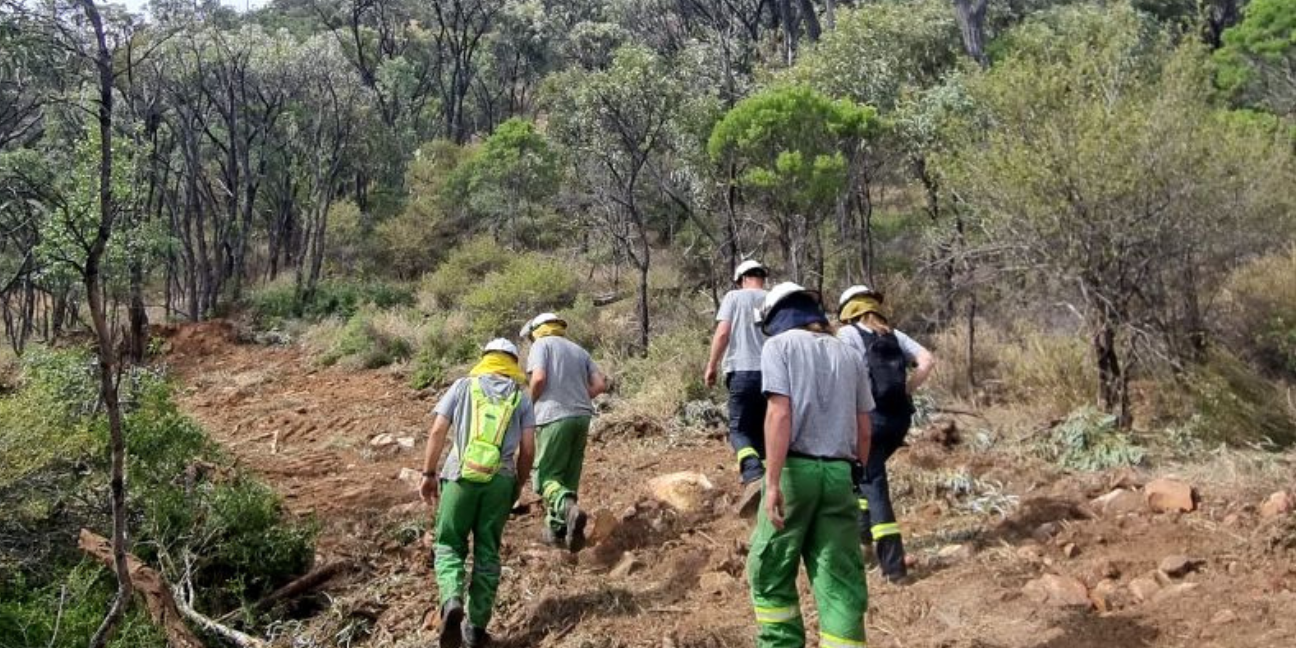
Photo credit: Kim Fleischfresser © Queensland Government
With the IMT collaborating with the Ghungalu people, who had provided a Cultural Liaison to the IMT and previous input to ensure responses did not damage significant cultural sites, as well as Queensland Rural Fire Service who assisted as neighbouring landholder liaisons and provided support crews to assist on the ground, the response had all the right people in the right places to navigate the bushfire threat. While the bushfire’s intensity varied, Rangers reported much of it was low to moderate thanks to reduced fuel loads achieved through prior planned burning efforts.
The fires were eventually contained following a combination of reinforcing fire lines with heavy plant vehicles, direct attacks by helicopter water bombing, back burning and very thorough blacking out by crews to reduce the likelihood of reignition.

Photo credit: Kim Fleischfresser © Queensland Government
Senior Ranger Kim was part of the Incident Management Team.
‘We’re very grateful of everyone involved, especially our local crews and strong partnerships we’ve developed over time, with over 90 personnel involved in this response.’
‘Everyone involved should be proud of the professionalism displayed in bringing these fires to their conclusion, including preparing the park after the bushfire had been extinguished so it could safely reopen for public access.’
‘The overall experience, opportunity for development and growth was invaluable for all,’ Ranger Kim said.
Cultural sites protected within Blackdown National Park represent thousands of years of connection to this landscape for the Ghungalu people, are irreplaceable and can be easily damaged. If you're visiting this spectacular sandstone country, with its deep gorges, springs and waterfalls, you can help protect this amazing place by looking and learning, but respectfully not entering or touching any culturally significant sites. This includes only visiting areas that are promoted on our website and Queensland National Parks Facebook and Instagram, and not on other social media channels.
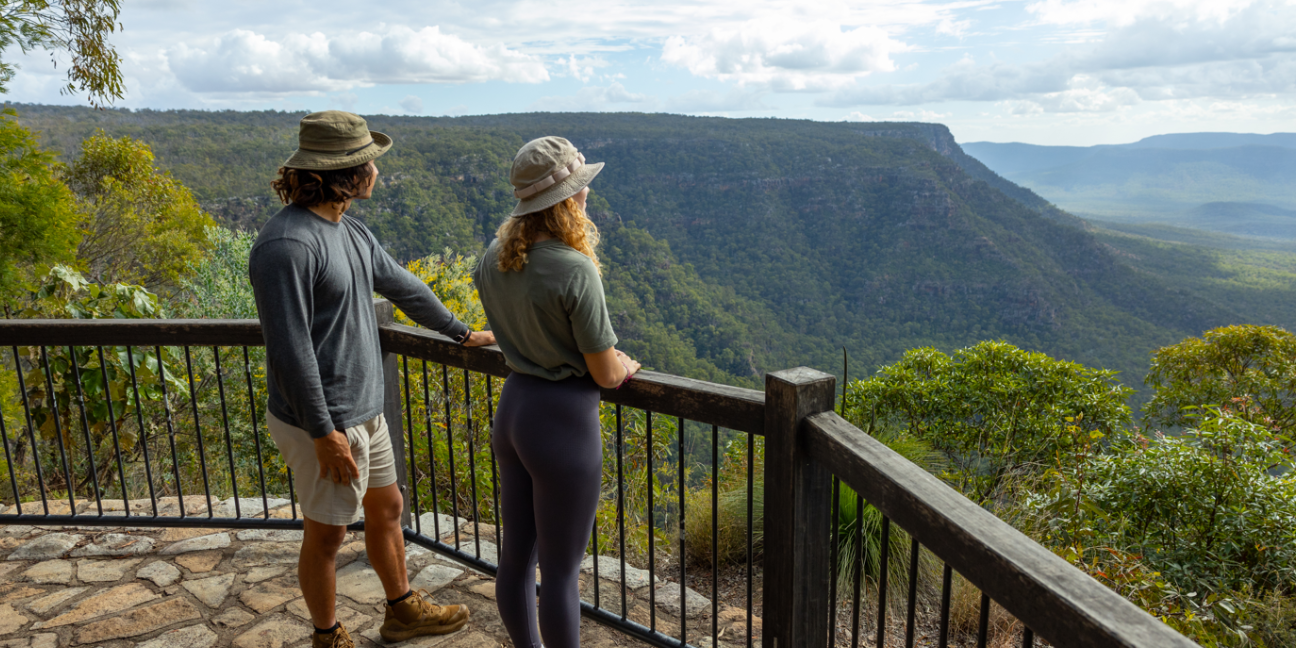
Yaddamen Dhina lookout, Blackdown Tableland National Park
Photo credit: © Queensland Government
Remember to always check Park Alerts before you leave home for the latest information on conditions, closures and access.
Stay up-to-date with current bushfire warnings and incidents from Queensland Fire Department (QFD).
Related articles
-
Image credit E. Kirkpatrick![Three people stand on a beach with their backs to the camera watching an orange sunset]() Turtle conservation in the Great Barrier Reef still making tracks, 45 years on
Turtle conservation in the Great Barrier Reef still making tracks, 45 years on
Issued 27 June 2025
It’s with the help of dedicated preservation zones, and avid researchers, that we can hope to see another shell-mazing 45 years of turtle research.
-
Issued 19 December 2024
QPWS carries out planned burns all year round in favourable conditions and we've recently conducted a burn which plays a vital role in conserving a…
-
Image credit © Queensland Government![Image of deer grazing and drinking from a billabong]() Feral deer eradication protects threatened turtles
Feral deer eradication protects threatened turtles
Issued 21 November 2024
The eradication of pest species is part of continued efforts to ensure Wild Duck Island remains a conservation haven for vulnerable flatback turtles.


