How do I apply?
Information Guide for new ecotourism proposals
The Information Guide for new ecotourism proposals on protected areas (the “Guide”) is designed for anyone interested in developing ecotourism proposals on protected areas, particularly those looking to present an idea and apply for permission to establish an ecotourism facility within a national park.
It provides an outline of the requirements for your proposal and offers a step-by-step guide to the application process. The Guide includes essential information about ecotourism in protected areas, detailing the legislative and regulatory framework that governs the development of such facilities. It also offers an overview of the application process from start to finish.
As a prospective applicant, this Guide will help you understand what is expected during the application and assessment stages. It explains how to prepare a comprehensive proposal that complies with legislative requirements for establishing an ecotourism facility on protected areas and outlines how the department assesses submissions to ensure they meet the necessary standards under the Nature Conservation Act 1992.
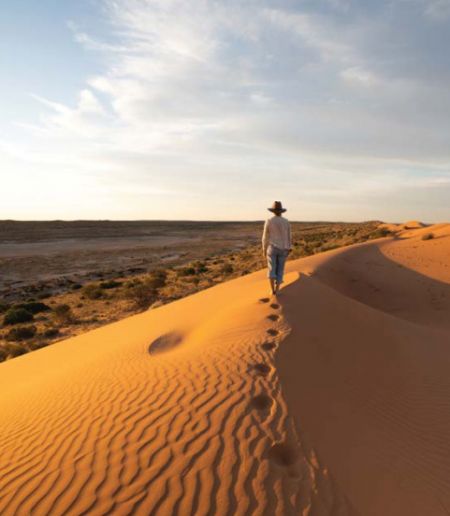
The Simpson Desert © Tourism & Events Queensland
Ecotourism and the Nature Conservation Act 1992
The Nature Conservation Act 1992 (NCA) governs the management of Queensland’s protected areas and defines ecotourism as tourism that is ecologically sustainable and primarily focused on experiencing an area in a way that fosters understanding, appreciation and conservation of the area and its natural and cultural values.
The object of the NCA is the conservation of nature while allowing for the involvement of Indigenous people in the management of protected areas in which they have an interest under Aboriginal tradition or Island custom.
The NCA outlines provisions for ecotourism facility proposals in protected areas. For national parks, section 35 allows the department’s Chief Executive to grant a lease, agreement, licence, permit or other permissions for ecotourism facilities.
Assessing ecotourism proposals
When planning and developing your ecotourism project, from the initial concept through to its operation, it is important to understand the criteria that will be used to assess your application. This understanding will help you effectively structure your ecotourism proposal, shaping the final submission to address the key criteria. The department evaluates and approves ecotourism proposals in line with the legislative requirements of the NCA to ensure that it:
Protected areas are lands in public ownership, set aside and managed by the Queensland Government to protect and conserve their special natural and cultural values, and to provide a place for people to visit and connect with nature and cultural heritage. These areas, therefore, provide important environmental, social and economic benefits to the public.
Privately owned ecotourism facilities on protected areas should represent the greatest net public benefit for the land, considering the environmental, social and economic outcomes of that use.
In determining the net public benefit of a proposed ecotourism facility, the relative balance between public and private interest, and between competing public interests, will be considered.
This assessment may include public consultation to canvas views about the proposal, for example, with Traditional Owners, stakeholders and the broader community.
The NCA defines ecologically sustainable use as use that is within the area’s capacity to sustain natural processes while –
- maintaining the life support systems of nature; and
- ensuring that the benefit of the use to present generations does not diminish the potential to meet the needs and aspirations of future generations.
A sustainable approach to establishing facilities on land with high ecological and cultural values, such as national parks, requires structures and associated activities to be fully integrated and in harmony with the ecosystem and its environmental features and constraints.
When determining whether a proposed ecotourism facility is ecologically sustainable, the following sustainability principles will be considered:
- preserving ecosystems, natural landscapes and special species
- minimising habitat loss, wildlife displacement and weed and pest invasions at the site and along access tracks
- site designs, layouts and construction materials that incorporate natural landscape features, minimise environmental impacts and suit the landscape
- efficient and sustainable use of water and energy
- waste minimisation and recycling strategies
- minimising impacts from noise and lighting sources, and on air quality.
Ecotourism facilities in Queensland must prioritise preserving the land’s natural condition and protecting cultural resources and values, with the government assessing proposals based on factors such as the land’s natural and cultural significance, existing disturbances, and the potential impacts of the development.
The scope of impact assessments, management plans, and auditing obligations will vary depending on the facility’s nature, scale, location, and associated risks.
When determining whether a proposed ecotourism facility preserves and protects natural and cultural resources and values, the Queensland Government will consider the:
- natural condition of the land and extent of any existing disturbance to the natural condition
- conservation significance of the land and its natural and landscape components
- cultural resources and values of the land, including natural, historic and indigenous places
- extent and degree that the proposed use will impact on the above, and whether strategies that minimise, adequately manage, or offset these impacts can be implemented.
Ready to apply?
Ecotourism case studies
These case studies highlight sustainable tourism in Queensland’s protected areas.