About Capricorn Coast
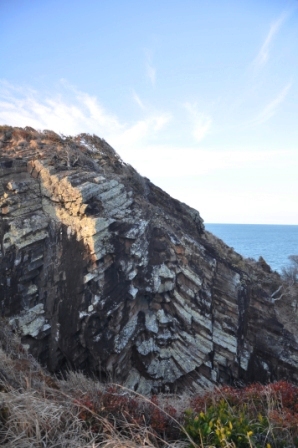
Fan Rock at Double Head Section.
Photo credit: courtesy of Querida Hutchinson
Park features
Rocky outcrops are a prominent feature of the Capricorn Coast. Formed in the late Cretaceous era between 79 and 73 million years ago when lava forced through outer layers of rock, these trachyte plugs now provide visitors with scenic viewpoints out to the Keppel Bay islands and the coastal hinterlands. The coastal reserves of Capricorn Coast National Park also protect a wide range of coastal plant communities including heathlands, open eucalypt forest, vine thickets and open tussock grasslands. Each section has something different to offer.
Double Head Section adjoins Rosslyn Bay Harbour and protects vine thicket with overhanging fig trees, windswept and stunted scrub land and open tussock grassland with grasstrees. Bird’s eye views over the harbour and a close-up of Fan Rock—the core of an old volcano—are two must see features of this section.
Rosslyn Head Section located between Statute Bay and Kemp Beach protects eucalypt forests and coastal sand dune heath and features a rocky headland rising 60m above sea level.
Bluff Point Section at the southern end of Kemp Beach is a popular picnic spot with superb coastal scenery. It features a range of coastal vegetation from mangroves and heathlands to open eucalypt forests and tussock grasslands and is the largest trachyte plug on the Capricorn Coast. Two lookout points are perfect for spotting marine life below and enjoying a cool sea breeze, the walk also provides marvellous views of the coastal hinterland and islands.
Cocoanut Point Section was added to Capricorn Coast National Park in 2006 and protects vine thickets with a heath understorey.
Looking after the park
Please help protect Capricorn Coast National Park by following these guidelines.
- Take all rubbish out of the national park for disposal or recycling. Rubbish bins are not provided.
- Do not feed native animals. Always keep all your food and scraps in animal proof containers.
- Leave your pets at home. Dogs and other domestic animals are not permitted in any section of the national park.
- Use public toilet facilities provided at Bluff Point or in the towns of Yeppoon or Emu Park.
- Empty chemical toilet waste at approved dump points, not in the Bluff Point toilets. The closest caravan dump point is located at Merv Anderson Park, Yeppoon.
- Leave Capricorn Coast National Park as you found it. All plants and animals are protected.
See caring for parks for more information about protecting our environment and heritage in parks.
Park management
The Queensland Parks and Wildlife Service manages Capricorn Coast National Park for the enjoyment of visitors and the conservation of our natural and cultural heritage.
Tourism information links
Capricorn Coast Visitor Information Centre
www.visitcapricorn.com.au
Ross Creek Roundabout, Scenic Highway, Yeppoon Qld
ph: 1800 675 785
email: yeppoon@capricorntourism.com.au
Tropic of Capricorn Shire Visitor Information Centre
www.explorerockhampton.com.au
176 Gladstone Road, Rockhampton Qld 4700
ph: (07) 4936 8000
email: infocentre@rrc.qld.gov.au
For tourism information for all regions in Queensland see Queensland Holidays.
- There are currently no park alerts for this park.