Visiting The Palms safely
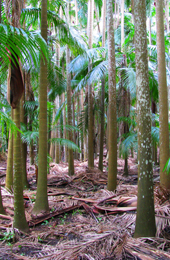
Small in size, but big in nature, The Palms conserves a patch of remnant rainforest.
Photo credit: Karen Smith © Queensland Government
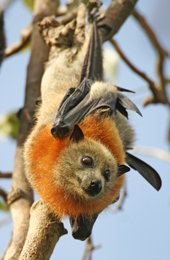
The grey-headed flying-fox is the only Australian flying-fox to have a collar of orange-brown fur encircling the neck.
Photo credit: © M. Wright
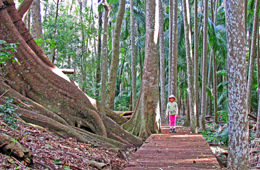
Walking The Palms circuit.
Photo credit: Karen Smith © Queensland Government
Getting there and getting around
The park is 8km north-east of Cooyar along a sealed but narrow road.
To get there, turn east off the New England Highway just 1km north of Cooyar, 94km north of Toowoomba and 28km south-west of Yarraman.
Contact Department of Transport and Main Roads to enquire about local road conditions.
Wheelchair accessibility
Facilities at The Palms are not wheelchair accessible.
Before you visit
Essentials to bring
- Bring and wear a hat, sunscreen, suitable footwear and insect repellent to ward of biting insects and ticks.
- Bring drinking water.
- Bring sturdy garbage bags or containers in which to store rubbish and recyclables for proper disposal after you leave.
Opening hours
The Palms National Park is open 24 hours a day.
Pets
Domestic animals are not permitted in The Palms National Park.
Climate and weather
Expect warm to hot summers and cool to cold winters. Temperatures peak at more than 35°C in December and drop below freezing overnight in winter. Most rain falls during the summer months, often as storms.
For more information see the tourism information links or the Bureau of Meteorology.
Fuel and supplies
Fuel and supplies are available at Cooyar and Yarraman.
Staying safe
Wear a hat, sunscreen, comfortable clothes and sturdy shoes with good grip. Stay together and keep to designated tracks. Always supervise children. Take drinking water.
Apply insect repellent on exposed skin and shoes to discourage biting insects.
Do not pick up dead or injured flying foxes.
Report sick, injured or orphaned wildlife
If you encounter sick, injured or orphaned wildlife immediately call 1300 ANIMAL (1300 264 625) for specialist advice to give the animal the best chance of survival.
The 1300 ANIMAL call centre operates between 7am and 7pm, 365 days a year. After hours arrangements are in place to ensure help is available. Visit the RSPCA website for information on who to contact after hours.
To report marine animal strandings (of sick, injured or dead turtles, dolphin, dugongs or whales) call 1300 130 372 (Press option 1).
Tick alert
Ticks are active all year round. Ticks bury their mouthparts into the skin, causing irritation and potentially illness or paralysis. Reduce exposure to ticks by wearing insect repellent. Avoid direct contact with grass, leaves, undergrowth and wildlife where possible.
Check yourself and children carefully for ticks, as some can be quite small. If you find a tick, freeze it, don’t squeeze it! Use a freezing product such as an ether-containing spray to freeze the tick. Tweezers should not be used to remove ticks. Expect some redness and swelling, but if you have a more severe reaction, seek medical advice promptly. Read more information about preventing tick bites and how to safely remove a tick.
In an emergency
In case of accident or other emergency:
- call Triple Zero (000)
- advise your location and nature of the emergency
- stay on the phone until you are told to hang up.
Mobile phone coverage is unreliable within The Palms National Park.
The nearest hospitals are located at Dalby and Kingaroy.
For more information about staying safe while visiting national parks, please read the guidelines Safety in parks and forests.
- There are currently no park alerts for this park.