About Blackbraes
Park features
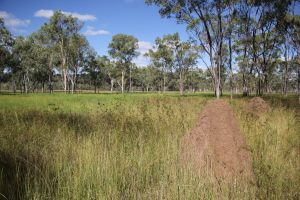
Wetlands and seasonally inundated grasslands at Blackbraes National Park.
Photo credit: © Linda Thompson
Undulating hills and ranges surround basalt outcrops, black soil plains and seasonal swamps. Ironbark woodlands provide habitat for grey kangaroos, abundant birdlife and many other native animals.
Adjacent to Blackbraes National Park are two resources reserves, Moonstone Hill and Kennedy Road Gravel. The national park and two reserves cover about 52,000ha, and straddle two bioregions—the Einasleigh Uplands and Gulf Plains. The national park and reserves are above 850m elevation providing a wetter and generally cooler climate compared with the surrounding country.
Moonstone Hill Resources Reserve, a volcanic vent, is popular for fossicking gem-quality feldspar called moonstone. Moonstone emits a silvery-white to blue colour when turned in certain directions. Fossicking in the reserve requires a licence.
Looking after the park
Everything in the national park is protected including plants, animals and cultural sites. Please appreciate, respect and help care for Blackbraes’ natural and cultural values by leaving things as you find them, and encouraging others to do the same by following these guidelines.
- Leave everything as you find it. Avoid disturbing animals, plants, heritage sites and cultural artefacts.
- Camp fires are permitted in the fire rings provided, except when QFD fire ban and restrictions or QPWS-imposed fire prohibitions are in place. Bring clean, pest free firewood such as untreated, mill off-cuts—collecting firewood from the national park is prohibited. Follow the Parks and forest guidelines for camp fires and cooking. Fuel or gas stoves are recommended.
- Toilets are not provided. Bury toilet waste (and paper) at least 15cm deep and 100m away from camp sites, tracks and watercourses. Bag all personal hygiene products including disposable nappies and wet-wipes for disposal off-park.
- Never contaminate water. Wash yourself and utensils well away (at least 50m) from waterways. Do not use detergent, soap or shampoo in or near waterholes or creeks.
- Stop the spread of weeds, insect pests and pathogens. New introductions can spread and displace resident species and alter the local ecology. Soil from your vehicle, camping gear and boots can contain weed seeds, ants (and their eggs) and foreign plant pathogens. Before you arrive clean all vehicles (especially the tyres and undercarriage), all camping equipment and walking gear. If available, use a washdown facility provided in a local town. Follow the come clean, go clean guidelines and learn more about pest plants and animals and pathogens.
- Manage your waste. Take rubbish with you when you leave as no bins are provided. Secure rubbish in a sturdy rubbish bag in a sealable animal-proof container for disposal at off-park waste disposal facilities. Never bury rubbish as animals will dig it up.
- Domestic animals are not permitted in the national park. Please observe the before you visit guidelines for dogs and pets.
- Keep food away from wildlife. Accidental or intentional feeding upsets the balance of nature and can make animals sick and/or aggressive. Never leave food or food scraps around your camp site or a day-use area.
- Be considerate of other campers. Please do not make undue noise or disturbance—this national park allows campers and visitors to enjoy a remote and natural setting.
- Don’t use firearms, chainsaws or unregistered vehicles in protected areas.
- Leave your drone at home. Flying drones in the national park can have a negative impact on wildlife (particularly birds), affect visitor’s privacy and enjoyment of nature and impact First Nations peoples’ cultural heritage. The use of drones is prohibited in the camping areas and strongly discouraged throughout the national park. Please follow drone-safety rules.
- Be considerate—much of the land surrounding the national park is privately owned. Only cross private land on a designated track with the landowner’s permission. Leave all gates as you find them. Be mindful, some maps show roads that are private and not open to the public.
- Keep to designated tracks as shown on the Blackbraes National Park map . Driving off-track damages vegetation, causes erosion and creates confusing new tracks.
- Don’t get bogged! Avoid driving on unsealed roads during and after heavy rains. Unsealed (dirt) roads and tracks may be overgrown with grasses and too wet to drive on.
- Fossicking is only permitted in Moonstone Hill Resources Reserve and requires a fossicking licence. Fossicking is not permitted in the national park.
See the guidelines on caring for parks for more information about protecting our environment and heritage in parks.
Park management
Formerly Blackbraes Pastoral Holding, Blackbraes National Park and the associated resources reserves—Moonstone Hill and Kennedy Road Gravel—were gazetted in 1998. Queensland Parks and Wildlife Service (QPWS) manages the protected area to conserve its natural, cultural and historic values.
Tourism information links
Flinders Discovery Centre
www.visithughenden.com.au
37 Gray Street, Hughenden QLD 4821
Phone: (07) 4741 2970
Email: info@flinders.qld.gov.au
'At the Creek' Julia Creek Visitor Information Centre
www.atthecreek.com.au
34 Burke Street, Julia Creek QLD 4823
Phone: (07) 4746 7690
Email: tourism@mckinlay.qld.gov.au
Kronosaurus Korner Information Centre
www.kronosauruskorner.com.au
91–93 Goldring Street, Richmond QLD 4822
Phone: 1300 576 665 or (07) 4719 3390
Email: enquiries@kronosauruskorner.com.au
For tourism information for all regions in Queensland, see Queensland Holidays.
-
The natural, cultural and historical significance of Blackbraes
- There are currently no park alerts for this park.