Visiting Blackbraes safely
Getting there and getting around
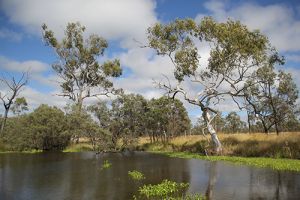
Simpsons Creek waterhole. Waterholes provide a refuge for native animals and plants in the parks' seasonally dry landscape.
Photo credit: Linda Thompson © Queensland Government
Map
Blackbraes National Park is on the Kennedy Developmental Road and can be accessed via Hughenden or the Lynd Junction.
Hughenden access
From Townsville follow the Flinders Highway 380km south-west, or from Mount Isa, follow the Flinders Highway 520km east. At Hughenden, turn onto the Kennedy Developmental Road and travel north for 170km to the national park.
Lynd Junction access
Access to the Lynd Junction is from Townsville (via Hervey Range), Charters Towers or Mount Garnet.
- From Townsville, follow Hervey Range Road for 109km through Hervey Range. Turn right onto the Gregory Developmental Road and travel 163km to the Lynd Junction.
- From Charters Towers, follow the Gregory Developmental Road north-west for 262km to the Lynd Junction.
- From Mount Garnet, travel 162km south on the Kennedy Highway to the Lynd Junction.
The national park is a further 95km south of the Lynd Junction on the Kennedy Developmental Road. The Kennedy Developmental Road is unsealed in places and may be temporarily closed or inaccessible after heavy rain.
All roads within the national park are unsealed (dirt). Emu Swamp camping area is accessible to 4WD vehicles only, Moonstone camping area is accessible to 2WD vehicles driven with caution. The unsealed (dirt) roads become boggy, over-grown and inaccessible during the wet season (usually November to March). Don’t drive into the national park during or after heavy rain—you could be stranded for days. If it’s flooded, forget it.
Before your trip remember to:
- Check Queensland Traffic and the Flinders Shire Council for current road conditions.
- Check Park alerts for Blackbraes National Park for the latest information on access, closures and conditions.
- Check Bureau of Meteorology for current weather and warnings.
Wheelchair accessibility
Wheelchair accessible facilities are not available in the national park.
Staying safe
The national park is isolated, and rangers may not be on park to help you. Unexpected rain and potential vehicle breakdowns require that you plan well ahead for your visit—you must be totally self-sufficient and prepared for all emergencies.
Be sure to read essentials to bring and follow the guidelines below to help make your visit a safe and enjoyable one.
Before you leave
- Plan for emergencies. Carry adequate food, drinking water, first-aid equipment, fuel and basic vehicle repair equipment and recovery gear in case of unexpected delays or breakdown.
- Pack at least one form of communication equipment. Satellite phones and Personal Locator Beacons (PLBs) are the most effective in this area. Mobile phone coverage is unreliable.
- Leave an itinerary with a friend or relative. Include travel routes and/or check-in points.
- Check current weather warning for Queensland. Heavy rain can flow down watercourses and affect access to the national park, even if there has been no local rain .
- Pack for hot and cold conditions (plus flies, midges and mozzies!). Outback Queensland can be very hot during the day, and very cold overnight. Check with the Australian Bureau of Meteorology for more information on average temperatures.
- Seek local advice. Contact relevant tourist information centres to help plan your trip.
- Book your camp site. To camp in a national park, you must plan well ahead and obtain a camping permit and pay your camping fee before you arrive. Remember, mobile phone coverage is very limited in Outback Queensland national parks. Visit Camping bookings for detailed information on camping bookings and fees.
While visiting
- Carry and drink plenty of water and try to recreate in the cooler part of the day. Ensure you have at least one form of communication equipment.
- Wear protective clothing. Put on a hat, sunscreen, insect repellent and wear sturdy enclosed footwear.
- Always carry a torch at night. This is when many snakes are active. Remember, all wildlife is protected. Set up your camp well before dark.
- Keep to designated roads. Watch out for animals on the roads, they can appear at any time of day though are generally more active at dusk and dawn.
- Drive to the road conditions. The unsealed (dirt) road in the national park maybe rough. Visitors must be experienced in four-wheel-driving and travel with the necessary recovery gear. During and after heavy rain the unsealed (dirt) road becomes boggy and undriveable.
For more information, please read the guidelines on safety in parks and forests.
In an emergency
For all emergencies call Triple Zero (000).
Mobile phone coverage is not available in the national park.
We highly recommend you visit the Triple Zero website before visiting a national park or forest. Download the Triple Zero emergency app to help identify your location. Important: if there is no mobile coverage on any network, you will not be able to reach the Emergency Call Service via a mobile phone.
Before you visit
Essentials to bring
To enjoy your time in Blackbraes National Park remember to bring:
- drinking water, sufficient for your stay
- a fuel or gas stove for cooking
- a first-aid kit, medical supplies and communication equipment
- food storage containers
- sunscreen, at hat, sunglasses and insect repellent
- bags to take your rubbish with you
- a shovel to bury toilet waste.
Opening hours
Blackbraes National Park is open 24 hours a day. The camping areas may be closed during the wet season, (usually November to March), when wet conditions make areas inaccessible. The national park may be closed at other times due to management activities or severe weather.
Permits and fees
Camping permits are required and fees apply. A camping tag or your booking details must be displayed at your camp site.
- Book your camp site online.
- If you cannot book online, see camping bookings for other options.
Fossicking in Moonstone Hill Resources Reserve requires a licence.
Other permits and fees
Various activities in Queensland parks and forests require a permit. Activities include commercial tours, social events, organised group visits, school excursions, scientific research, professional photography and the sale of photographs or vision of the park. See Permits and fees for further information.
Pets
Domestic animals are not permitted in Blackbraes National Park or the resources reserves.
Climate and weather
In summer, daytime temperatures can exceed 35°C. The cooler months of the year—May to August—are the best times to visit. Night-time temperatures can drop below 6°C and frosts can occur during this time. Most rain falls in the summer months—December to March—and there is little rainfall in winter. Weather forecasts are available from the Bureau of Meteorology.
Fuel and supplies
Fuel and supplies are available at Hughenden (170km) and the Lynd Junction (95km). For more information, see the tourism information links.
- There are currently no park alerts for this park.