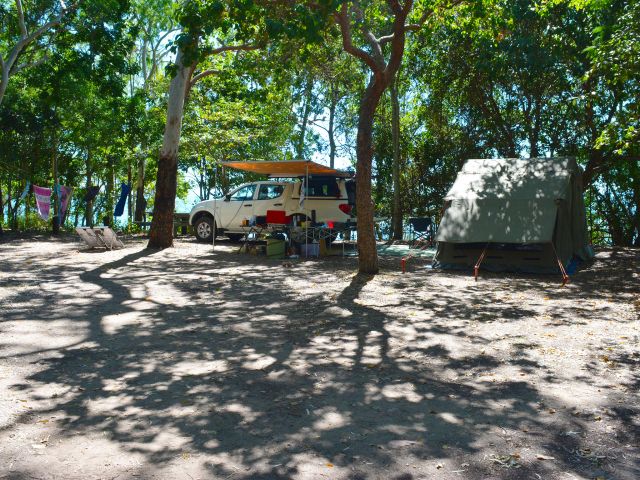
Camping in Cape Hillsborough
This significant spiritual place is known as Yuwi nandhi (land) traditional yamba (home) of the Yuwibara (people). Stay overnight to see the diverse habitats of Cape Hillsborough National Park, let the spirit of the land talk to you, and feel the Yuwi people’s deep connection to their land and sea Country.
Camping permits are required and fees apply. A camping tag or permit details must be displayed at your camp site.
To improve access in the community to camping opportunities at Smalleys Beach camping area, you must attend your campsite within 24 hours of booking commencement (2pm on the start date of the permit). Once you have arrived, your campsite must not be left unattended for more than 24 hours, without a reasonable excuse. Non-attendance can result in your camping permit being amended, suspended or cancelled. Refer to legal requirements when in camping in Queensland Parks and forests.
Park-specific conditions
- Camp fires are permitted in the fire rings provided at each camp site (except when fire prohibition and fire bans apply). Bring your own clean, milled firewood. Extinguish your camp fire with water when you leave. It is recommended to use a fuel or gas stove.
- Fires are prohibited anywhere else in the national park, including on the beach.
- Maximum length of stay is 14 nights.
- Rubbish bins are not provided. Bring a sealable container to store your rubbish in. Take your rubbish with you when you leave for dispose or recycling.
- Generator use is prohibited within the camping area.
- Dogs and other domestic animals are prohibited in all national parks.
- Drones are prohibited at Smalleys Beach camping area, see Drone safety and regulation.
- No smoking (including vaping) within 10m of camp sites, toilets or other visitor facilities.
- Marine stingers (dangerous stinging jellyfish) can be life threatening and may be present in coastal waters at any time of the year but occur more frequently in the warmer months. Visit Surf Life Saving Queensland for the latest safety advice.
- Crocodiles can be found in any waterway including rivers, creeks, beaches, oceans and waterholes. Be Crocwise around the water.
- Remain SharkSmart in Queensland waters.
Read more about staying safe and looking after the park.
-
You will need to stay for a few days to fully unwind and experience all this magical part of the world has to offer.
- Tent camping
- Caravan camping
- Camper trailer camping
- Campfires allowed
- Toilets
- No showers
- No barbecue
- No picnic tables
- No wheelchair access
- No generators allowed
- No dogs permitted
- There are currently no park alerts for this park.