Things to do
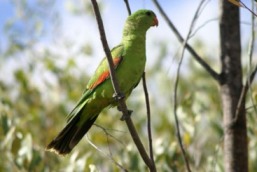
Red-winged parrot at Moorrinya National Park.
Photo credit: Brian Furby Collection
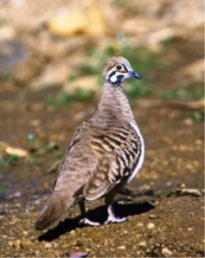
Squatter pigeons are often seen at Moorrinya National Park.
Photo credit: Brian Furby Collection
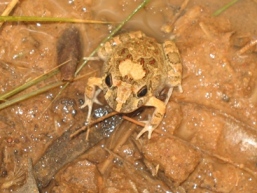
Male ornate burrowing frogs can often be heard in the wet season.
Photo credit: Eleanor Collins © Queensland Government
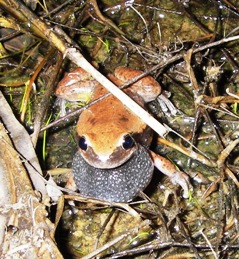
Listen for calling ruddy treefrogs.
Photo credit: Tony Salisbury © Queensland Government
Camping and accommodation
Camping
Camp near the old shearing shed close to Bullock Creek at Shirley Shearing Shed camping area. There are 7 numbered camp sites and a toilet (non-flush) is available. Access is suitable for 4WD vehicles. A camping permit is required and fees apply. A camping tag or your booking details must be displayed at your camp site.
- Find out more about camping in Moorrinya National Park.
- Book your camp site online.
- If you cannot book online, see camping bookings for other options.
Other accommodation
A range of accommodation, including hotels, camping and caravan parks, are available at Torrens Creek, Hughenden, Pentland and Charters Towers. For more information, see the tourism information links.
Walking
Bullock Creek walk
Grade 3
Distance: 200m return
Time: allow 15min walking time
Details: Take a short stroll from the camping area to Bullock Creek and explore a series of seasonal waterholes. Take care as the track along the creek is not formed or marked. Remember to follow the Parks and forests walk with care guidelines.
At the creek look for native fish including spangled perch Leiopotherapon unicolor, glassfish Ambassis sp. and silver catfish Plotosus argenteus. Waterbirds, such as the hoary-headed grebe Poliocephalus poliocephalus and Australasian darter Anhinga novaehollandiae, may be seen searching for food amongst the reeds. Shade is limited so try to walk in the cooler parts of the day.
Driving
Maps
Trail bikes and 4WD vehicles are allowed on Moorinya’s internal roads and firebreaks. Riders and drivers must be licensed, and trail bikes and vehicles must be fully registered. Vehicle access is not maintained within the stock route. Expect to share the roads with pedestrians, cyclists and other vehicles.
Stay on formed roads—trail bikes and vehicles are not permitted off-road.
For more information, see trail-bike riding and four-wheel-driving.
Cycling
Maps
Cycle on Moorinya’s internal roads and firebreaks. Expect to share the roads with wildlife, pedestrians and vehicles.
Remember to follow the Parks and forests cycle with care guidelines.
Viewing wildlife
The national park is popular with birdwatchers and nature lovers—165 bird, 40 reptile, 17 mammal, 9 frog and 7 fish species have been recorded in the national park.
Red-winged parrots Aprosmictus erythropteru, pale headed rosellas Platycercus adscitus and sulphur-crested cockatoos Cacatua galerita are often seen near the camping area, especially at dawn and dusk.
During the day look for koalas Phascolarctos cinereus sleeping in the canopy, and eastern grey kangaroos Macropus giganteus, common wallaroos Macropus robustus and red kangaroos Macropus rufus seeking shade from the sun’s heat. Double-barred finches Taneiopygia bichenovii and chestnut-breasted mannikins Lonchura castaneothorax are often seen feeding on and near the ground, as are squatter pigeons Geophaps scripta.
At night listen for the ‘woof woof’ call of barking owls Ninox connivens and look for sugar gliders Petaurus breviceps soaring between trees. During the wet season the national park comes alive with the sounds of frog calls. Listen for ornate burrowing frogs Platyplectrum ornatum, greenstripe frogs Cyclorana alboguttata, ruddy treefrogs Litoria rubella and northern laughing treefrogs Litoria rothi.
- There are currently no park alerts for this park.