Visiting Porcupine Gorge safely
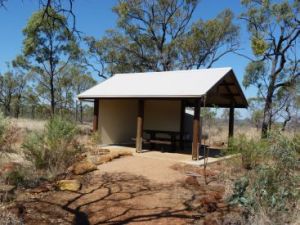
Sheltered picnic table Pyramid day-use area.
Photo credit: Queensland Government
Getting there and getting around
Access to Porcupine Gorge National Park (including the lookout and camping area) is fully sealed. From Hughenden, follow the Kennedy Developmental Road north for 60km to reach the turn-off to the Gorge lookout. From the turnoff, follow the Porcupine Gorge lookout access road for 1.5km to reach The Gorge lookout car park.
The turn-off to the Pyramid camping area, day-use area and walking track is a further 11.7km north along the Kennedy Developmental Road. From the turn-off, follow the
Mount Emu Road for 4.5km, then turn right (east) onto the Pyramids access road, follow the road for 2.5km to reach the Pyramid camping and day-use area.
If travelling further north to Blackbraes National Park or the Lynd Junction, please be aware that the Kennedy Developmental Road is unsealed (gravel) in some sections. When dry, the road is accessible to all vehicle types with caution. When travelling north expect to encounter bulldust and corrugations, exposed rocks, creek crossings, other vehicles and road trains, native wildlife and cattle. After rain the road may be temporarily closed or inaccessible to 2WD vehicles and caravans.
Before your trip remember to:
- Check Queensland Traffic and the Flinders Shire Council for current road conditions.
- Check Park alerts for Porcupine Gorge National Park for the latest information on access, closures and conditions.
- Check Bureau of Meteorology for current weather and warnings.
Wheelchair accessibility
The Pyramid camping area has wheelchair-accessible toilets. Some camp sites have wheelchair-accessible picnic tables (assistance maybe required). To see which campsites are suitable for wheelchair access, refer to camping in Porcupine Gorge National Park.
The Gorge lookout is wheelchair-accessible with assistance.
Staying safe
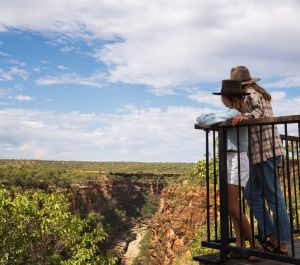
Gorge lookout. Take care near cliff edges and at lookouts
Photo credit: Courtesy of Tourism and Events Queensland
The national park is semi-remote, and rangers may not be on park to help you. Hot weather, unexpected rain and potential vehicle breakdowns require that you plan well ahead for your visit—you must be totally self-sufficient and prepared for all emergencies.
Be sure to read essentials to bring and follow the guidelines below to help make your visit a safe and enjoyable one.
Before you leave
- Plan for emergencies. Carry adequate food, drinking water, a first-aid equipment, fuel and basic vehicle repair equipment in case of unexpected delays or breakdown.
- Pack at least one form of communication equipment. Satellite phones and Personal Locator Beacons (PLBs) are the most effective in this area. Mobile phone coverage is unreliable.
- Leave an itinerary with a friend or relative. Include travel routes and/or check-in points.
- Check current weather warning for Queensland. Flood waters can flow down watercourses from hundreds of miles away, even if there has been no local rain.
- Pack for hot and cold conditions (plus flies and midges!). Outback Queensland can be very hot during the day, and very cold overnight. Check with the Australian Bureau of Meteorology for more information on average temperatures.
- Seek local advice. Contact relevant tourist information centres to help plan your trip.
- Book your camp site. To camp in a national park, you must plan well ahead and obtain a camping permit and pay your camping fee before you arrive. Remember, mobile phone coverage is very limited in Outback Queensland national parks. Visit qld.gov.au/camping for detailed information on camping bookings and fees.
While visiting
- Keep to designated roads. Watch out for animals on the roads, they can appear at any time of day though are generally more active at dusk and dawn.
- Always carry a torch at night. This is when many snakes are active. Remember, all wildlife is protected.
- Watch your step. Take care near cliff edges, on steep slopes and uneven surfaces on walking tracks and at lookouts. The terrain may be unstable due to natural weathering. A serious injury may result from a trip, stumble or fall.
- Keep to the walking tracks at all times. Heed all safety and warning advice.
- Avoid walking in the heat of the day. Do not underestimate the intensity of the heat on the walking tracks— heat radiates off the sandstone and from the hot sun above which significantly increases the daytime temperature in the gorge.
- Never jump or dive into water. It may be shallow or hide submerged objects.
- Wear protective clothing. Put on a hat, sunscreen, insect repellent and wear sturdy enclosed footwear, not thongs.
- Carry and drink adequate water. Treat all water collected from the creek..
For more information, please read the guidelines on safety in parks and forests.
In an emergency
For all emergencies call Triple Zero (000).
Mobile phone coverage is unreliable in the national park. Consider taking a satellite phone, Personal Locator Beacon (PLB) or another form of communication.
We highly recommend you visit the Triple Zero website before visiting a national park or forest. Download the Triple Zero emergency app to help identify your location. Important: if there is no mobile coverage on any network, you will not be able to reach the Emergency Call Service via a mobile phone.
Before you visit
Essentials to bring
To enjoy your time in this national park, remember to bring:
- drinking water, sufficient for your stay
- a fuel or gas stove for cooking (recommended) and/or clean, pest free firewood
- a first-aid kit, medical supplies and communication equipment
- reliable camping gear in good working order.
- food storage containers
- sunscreen, at hat, sunglasses, insect repellent and sturdy walking shoes
- sturdy rubbish bags to take your waste with you
- warm clothes for the chilly winter months, temperatures in the gorge are noticeably cooler than on the surrounding plains.
Opening hours
Porcupine Gorge National Park is open 24 hours a day. The national park may be closed at times due to severe weather or management operations.
See park alerts for Porcupine Gorge National Park for the latest information on national park access, closures and conditions.
Permits and fees
Camping permits are required and fees apply. A camping tag or your booking details must be displayed at your campsite.
- Book your campsite online.
- If you cannot book online, see camping bookings for other options.
Other permits and fees
Various activities in Queensland parks and forests require a permit. Activities include commercial tours, social events, organised group visits, school excursions, scientific research, professional photography and the sale of photographs or vision of the park. See Permits and fees for further information.
Pets
Domestic animals are not permitted in Porcupine Gorge National Park.
Climate and weather
The hottest months in the park are October to March, when the average maximum temperature is often above 35°C. In the cooler months, June to August, the average maximum is 25°C and the minimum drops to about 10°C. However, temperatures in Porcupine Gorge are generally lower and visitors should bring warm clothing, particularly in winter. Most rain falls in the summer months, December to April, with little rain in winter.
Fuel and supplies
Fuel and supplies are available at Hughenden (79km).
For more information see the tourism information links.
- There are currently no park alerts for this park.