Things to do
Camping and accommodation
Camping
Camping is permitted at Broadwater Waterhole camping area. No facilities are provided.
Camping permits are required and fees apply.
- Find out more about camping in Lochern National Park.
- Book your camp site online.
- If you cannot book online, you can purchase camping permits at an over-the-counter booking office or learn about our camping booking options.
- See more general information about camping in national parks.
Other accommodation
There is a range of accommodation in and around Longreach. For more information see tourism information links.
Walking
There are no formal walking tracks in the national park. Though you can wander along the banks of the waterholes and the Thomson River, remember to pack your binoculars. The scenic Bluebush Drive is also suitable for walking, watch out for other track users.
- When walking, wear sun protection and sturdy shoes, carry plenty of water, and follow the walk with care guidelines.
Driving
For your best chance to see Lochern’s wildlife, drive slowly and set out in the early morning or late afternoon. To help you plan your visit to Lochern National Park, download the Central West Queensland National Parks visitor guide(PDF, 4.8MB).
- Please practise low impact driving in Lochern National Park.
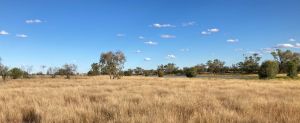
Bluebush Lagoon. Appreciate the wide-open space of the Mitchell grass plains and lagoons of the Channel Country.
Photo credit: Sophia Levy © Queensland Government
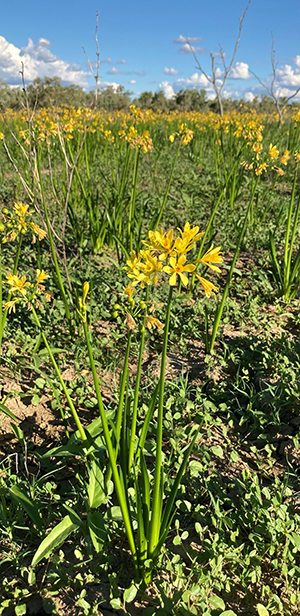
Water brings life — Bulbine lilies flower after flood.
Photo credit: Sophia Levy © Queensland Government
Bluebush Drive—approximately 40km one way (allow 2–4 hours)
The Bluebush Drive starts at the national park visitor centre located at the ranger station (7km from Broadwater Waterhole camping area). At the visitor centre learn about the cycles of wet and dry in the Channel Country and the Lochern landscape. A toilet (flush) is available at the visitor centre.
From the visitor centre, Bluebush Drive loops around the southern section of the park then back onto Tonkoro Road at the Thomson River near the park’s eastern boundary. Drive through bloodwood and mulga woodlands, past gidgee swamps and gaze across open Mitchell grass plains and the channels of the Thomson River. Step out of your vehicle at Bluebush Lagoon to watch waterbirds or examine blossoms on tiny plants. See the relics of the pastoral era at the shepherd yards and shearing complex or take a wander around the old homestead situated on the flood-prone banks of the Thomson River.
Travel slowly and be careful of other track users and wildlife.
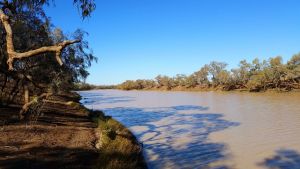
Dip your paddle in the still waters of the Thomson River.
Photo credit: Sophia Levy © Queensland Government
Canoeing and kayaking
Canoe or kayak along the still waters of the Thomson River at Broadwater Waterhole. Early morning is the best time for viewing wildlife along the banks of the river. Follow the guidelines for water safety.
Fishing
Fishing in the waterholes is permitted, however size and bag limits apply. Contact the Department of Agriculture and Fisheries for more information about fishing regulations. Follow the guidelines for boat and fish with care.
Cycling
You can ride your bicycle along the Bluebush Drive. Be careful and watch out for vehicles and pedestrians on the track.
Viewing wildlife
- Species lists are available from the Queensland Government's request a species list page.
Animals
Lochern is bustling with wildlife if you know where to look. When in the woodlands, look for hooded robins and Major Mitchell's cockatoos. Mallee ringneck, red-winged, mulga and Bourke's parrots are also common. Listen carefully for the crested bellbird's clear call.
The eastern dead finish shrublands are home to Hall's babblers and splendid fairy-wrens. Emus abound at Lochern in good seasons. In late winter, watch for the male emu with strings of newborn chicks following closely behind.
Australian bustards are most likely to be seen in the Mitchell grass plains and between river channels. Stately brolgas also frequent the plains and spotted harriers can be seen gliding low, hunting for food.
Identify scavenging black kites as they fly overhead by the fork in their tail. Whistling kites nest and call beside Broadwater Waterhole.
You will probably hear the trumpeting, creaky call of red-tailed black-cockatoos before you see them flying along the river channels with their deep, slow wing beats. Budgerigars nest in the coolibahs and little black-fronted dotterels scurry along the edge of waterholes. The bird flying erratically in your headlights with the large white spots in its wings is a spotted nightjar.
Fallen timber in the gidgee woodlands is a haven for reptiles such as spiny-tailed geckos, marbled velvet geckos and gidgee skinks. In the warmer months you may be lucky enough to come across a handsome black-headed python stretched across the road at night.
Large yellow goannas search through the day for carrion, burrowing lizards and frogs. Listen for tiny chirping froglets in mud cracks at the edge of waterholes. You may also spy a turtle poking its head out of the water. After dusk, watch for bats scouting for insects overhead.
Brushtail possums have been seen in coolibahs beside Broadwater Waterhole. They are at the edge of their distribution on Lochern. Red kangaroos, eastern grey kangaroos and wallaroos are the most common larger animals.
Plants
Lochern supports a number of plants typical of the Channel Country and Mitchell Grass Downs bioregions. These include groups of mixed mulga, hakea and western bloodwood, and coolibah and gidgee woodlands.
The Thomson River's braided channels give life to grasses, herbs and bluebush and lignum shrublands. Naturally open Mitchell grass plains stretching back from the river give way to bands of open gidgee and thick mulga.
All four species of Mitchell grass (bull, curly, barley and hoop) are found at Lochern. Stony areas support groups of whitewood and gidgee woodlands with Mitchell grass.
Some sand-plains in the park support leopardwood and gidgee woodlands, while others support shrublands of eastern dead finish and mulga. These groups of plants have a restricted habitat. The mauve flowers of the silver turkeybush provide a particularly attractive setting in the distinctive tall shrublands of eastern dead finish on red sandy soil. A sweet scent emanates from the bush after rain.
- Temporary partial closure : Bluebush Drive east section 11 August to 30 October 2026