- Issued
- 28 February 2025
- Region
The Wulgurukaba have cared for Yunbenun (Magnetic Island) for thousands of years. Along the island’s shores, archaeological sites are a sacred reminder of the connection Traditional Owners have to Country.
Artefacts are concentrated in sheltered bays that look towards the mainland and neighbouring islands. Camp sites, scar trees, rock paintings, stone tools, ceremonial sites and shell middens reveal the paths walked by ancestors.
“Yunbenun is rich in Wulgurukaba cultural heritage that our old people left for us to protect and to reinforce our identity and connection to this land and sea Country. Art sites, middens, camp sites, burial sites and cultural artefacts are evidence of this.”
Lyle Johnson, Wulgurukaba Elder
Claiming the coast
Colonists arrived in the Gurambilbarra (Townsville) area in 1864, determined to establish a port for North Queensland’s fledgling pastoral industry. Wielding firearms, colonists deliberately forced Wulgurukaba people away from the coast. Threats and intimidation tactics were persistent, forcing Wulgurukaba people to retreat inland. Wulgurukaba people remained on Yunbenun until the 1920s before being forcibly removed from the island.

Brian Johnson (pictured left) and Lyle Johnson (pictured right), Wulgurukaba Elders.
Photo credit: Styledia © Queensland Government
Our people were forced off this Country. They didn’t leave willingly.
Lyle Johnson, Wulgurukaba Elder (pictured right)
Forced away from Country and kin
From 1897 until 1969, Wulgurukaba people were forcibly removed from their Country and their families, being moved to missions and reserves across Queensland in a deliberate attempt to disrupt culture and community. Queensland law gave the government and its representatives the legal power to move Aboriginal and Torres Strait Islander people. Taken from their families, people were often placed in reserves elsewhere in the state. Some were later moved again, taken to a different reserve and forced to find a sense of community once again. In some cases, multiple generations of the same family were subjected to the trauma of removal.

Virginia Wyles, Wulgurukaba Elder.
Photo credit: Styledia © Queensland Government
I’d seen it on so many old people’s faces when we researched to find others with connection. That sadness on their faces—it was this sort of sorrow that was just entrenched.”
Virginia Wyles, Wulgurukaba Elder
Laws in Queensland allowed the government to control the movement of First Nations people and limit their rights.
| 1885 | Elections Act Specifically excluded Aboriginal people from voting |
|---|---|
| 1897 | Aboriginals Protection and Restriction of the Sale of Opium Act Removed the basic freedoms of many Indigenous people relating to movement, labour, custody of children and control of personal property |
| 1930 | The Elections Acts Amendment Act Expanded voting exclusion to also deny Torres Strait Islander people |
| 1939 | Aboriginals Preservation and Protection Act Repealed previous legislation to redefine racial classifications |
| 1962 | The Commonwealth Electoral Act Gave Indigenous people the right to enrol and vote |
| 1965 | Aborigines’ and Torres Strait Islanders’ Affairs Act Repealed previous legislation about ‘protection’ and shifted the focus to assimilation |
A ban on language and culture
Across Queensland, missions and reserves were set up as settlements for Aboriginal people. Some were managed by the government, others by church organisations. Aboriginal people were often forbidden from speaking their language. Despite this, many managed to keep cultural practices alive, gathering in secret to share stories and language.
Yarrabah
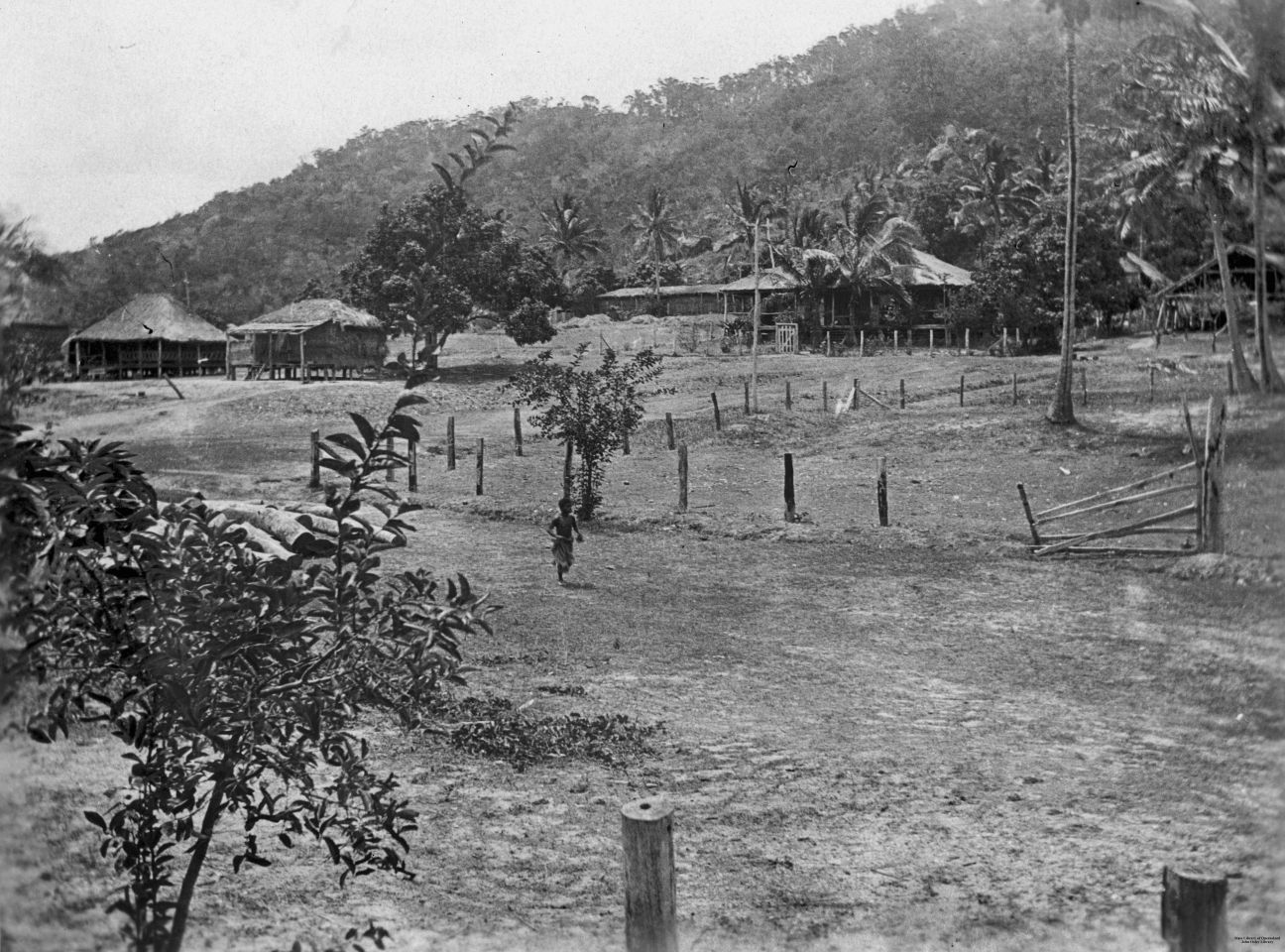
Yarrabah Mission.
Photo credit: © State Library of Queensland
Located roughly 60km southeast of Cairns, the coastal reserve at Yarrabah was established by the Anglican Church to convert Aboriginal people to Christianity. The reserve became an official destination for children charged as being ‘neglected’.
I lived with my Granny Ada in Yarrabah. She had a huge house where the church is now and that’s where we all lived. She had nine children and lots of grandchildren. Where we lived, right up on the beach, you have all these mangroves. And we used to sit there quite a bit and do all our fishing and that. And Granny Ada would tell us about mangroves on Magnetic Island. We used to spend hours on the beach listening to those stories. Being near the ocean, you can still feel that connection. That’s why I’ve always lived beside the sea.
Flo Watson OAM, Wulgurukaba Elder
People were so controlled, they would have to get an exemption to come back (to Country). There were a lot of people at Yarrabah because it was set up as a penal colony and dormitory. A lot of people requested to go back home, but they didn’t let them.
Gail Ambrym, Wulgurukaba Elder
Palm Island
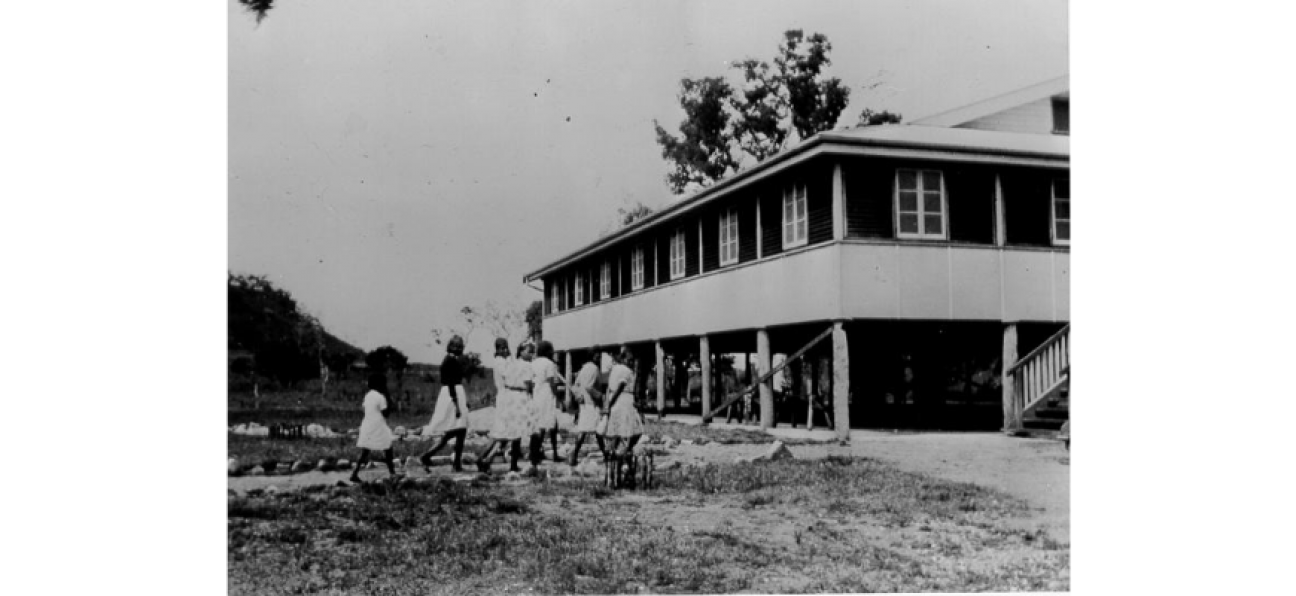
Palm Island Aboriginal Settlement.
Photo credit: © Townsville City Council
Palm Island Aboriginal Settlement was located 65km northeast of Townsville, on the largest of the islands in the Palm Islands Group. It became known as a place to send ‘troublesome cases’ from other reserves.
I remember being taught by the old women. They taught me to hunt out on the reef, and a great appreciation of the sea life. I remember the men used to make all the fishing nets, and once a week, when the tide was right, they’d go drag these big nets so that the community had lots of fish and they’d share it out. There was always such resources on Palm.
Chris George, Wulgurukaba Elder
Woorabinda
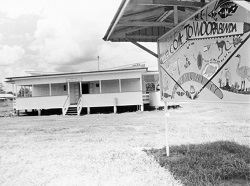
Woorabinda administration office. March 1976
Located in Central Queensland, the reserve at Woorabinda was established in 1927. During World War II, primitive and inadequate living conditions led to outbreaks of disease such as measles, influenza and pneumonia. Many Aboriginal people died as a result.
Cherbourg
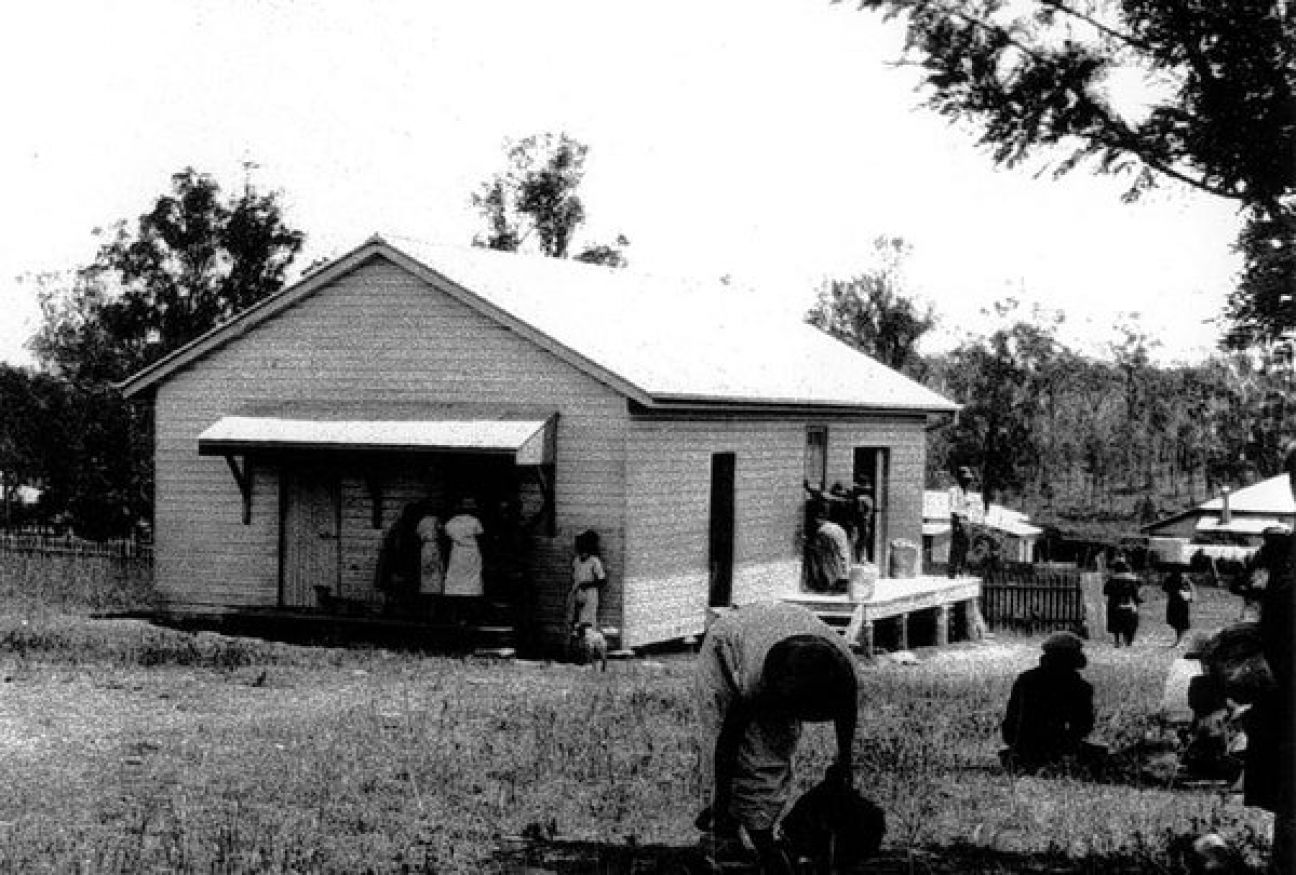
Cherbourg Rational Station, 1920s
The reserve at Cherbourg was established more than 150km inland from Queensland’s coast. The separation of people to strict girls’ and boys’ dormitories contributed to significant social deconstruction of groups sent to this reserve.
I spent most of my childhood in Cherbourg. Every time we went camping and hunting and fishing, they’d tell us this is what we would have been doing up north. You can’t envisage how we lived in the 1940s–50s. Our life was so controlled. You couldn’t talk to anybody in language. You couldn’t talk about where you were from. If you were caught, or dobbed in by other people, you were immediately separated from your family and sent to Palm Island and Woorabinda. That’s why we always went camping and we could speak freely. Anyway, that’s how we lived and we survived.
Iris Glenbar, Wulgurukaba Elder
We lost two children, they died on the boat going down to Cherbourg Aboriginal Settlement. They sent them from this warm Country down to the cold Country with nothing—they had nothing.
Michelle Hegarty, Wulgurukaba Elder
It’s because of my grandmother that I'm here today. Because she gave us that opportunity to acknowledge and walk on our Country. She yearned for her own Country—to come back home.
Gail Ambrym, Wulgurukaba Elder
Information on this web page embodies the cultural knowledge of the Wulgurukaba people, included with the consent of the custodians of this community.
Related stories
-
The Wulgurukaba people’s long journey for recognition and protection of their Country.
-
Wulgurukaba people’s perspectives of spiritual and cultural connection to County.
-
Wulgurukaba ethnobotanic and cultural understanding of flora and fauna of Yunbenun.


