The end of an era for Queensland’s forest reserves: a 25-year conservation journey
- Issued
- 27 April 2026
After nearly 26 years, Queensland’s forest reserve tenure has come to an end—marking a major milestone in the protection of more than a million hectares of forest across the state.
Over this time, a quiet but significant transformation has unfolded across Queensland’s forests—helping shape the protected area network we know today.
It began as a bold attempt to balance conservation, timber interests and community needs—and it ended with a major milestone for nature protection. On 20 November 2025, the Governor in Council approved the transfer of the final 23 forest reserves, bringing forest reserve tenure to an official end.
It was the conclusion of one of Queensland’s most significant and complex land transitions—protecting habitat, improving connectivity between protected areas, and adding hundreds of thousands of hectares to the conservation estate.
 Open larger image
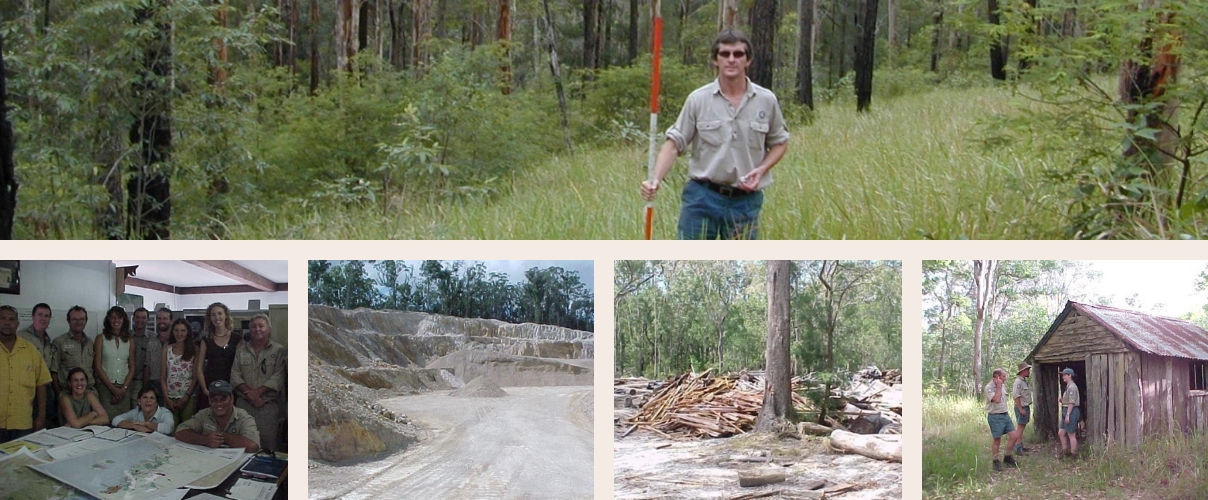
Behind the scenes of the forest reserves transition was an enormous amount of work involving many people.
Where it all began
The story begins in 1992, when Australian federal and state governments developed a national forest policy statement to support ecologically sustainable forest management, aimed at balancing environmental, social and economic values.
In Queensland, this led to a state-based agreement known as the South East Queensland Forest Agreement (SEQFA). Signed on 16 September 1999 by the Queensland Government, the Australian Rainforest Conservation Society, the Queensland Conservation Council, The Wilderness Society, and the Queensland Timber Board.
This unique agreement involved Queensland’s most heavily forested and contested regions and led the way for a much broader statewide process involving the transfer of State forests and other State land to the conservation estate in locations outside of South East Queensland, such as in the Wet Tropics.
At the heart of the agreement was a major undertaking: transferring an estimated 425,000 hectares of State forest and timber reserve land into a new tenure under the Nature Conservation Act 1992 (NCA) called forest reserves.
Why forest reserves were created
Moving land from State forests to protected area tenure couldn’t happen overnight. It required an involved two-step process.
The first step was to provide for the immediate cessation of timber harvesting while maintaining the ability to continue to apply the Forestry Act 1959 and new land management principles for this tenure under the NCA. To make this possible, the new tenure of forest reserve was created on 10 November 2000.
Forest reserves were designed as a transition tenure. They gave time to further assess the conservation values of the land and work with stakeholders to inform final tenure decisions.
Depending on the outcome of those assessments, land could then be progressively dedicated as appropriate protected area such as national park or conservation park for long term protection under the NCA.
At the same time, the tenure type National Park (Recovery) was established to allow areas needing significant rehabilitation to be protected.
 Open larger image
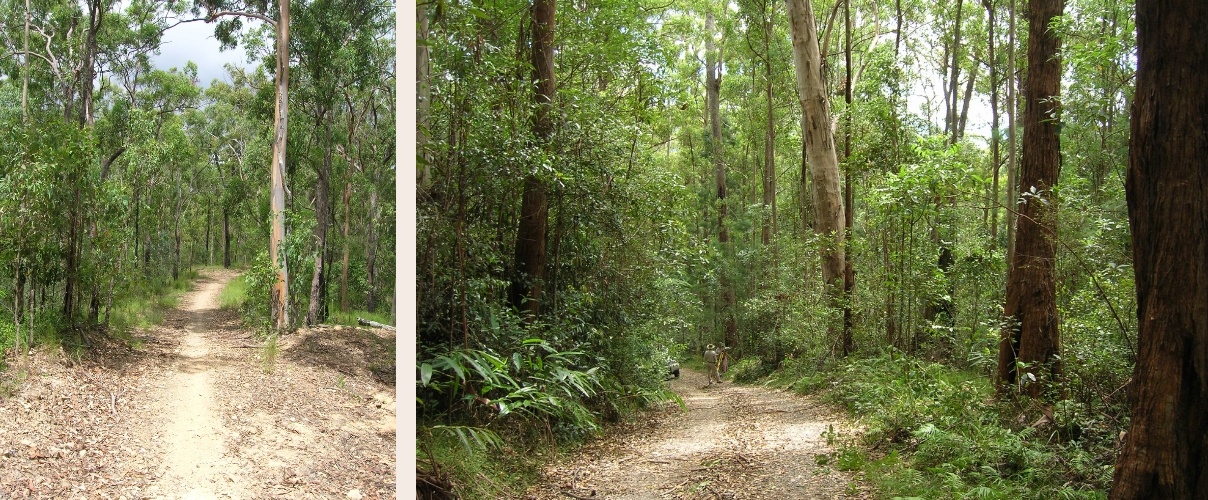
Left: Austinville Forest Reserve 1 c. March 2006 (now part of Springbrook National Park). Right: Clagiraba Forest Reserve which transitioned to Nerang Conservation Park in 2009.
A bigger journey than first imagined
What started as an estimated transfer of 425,000 hectares quickly grew into something much larger.
The popularity of the new tenure meant the schedule in this regulation would increase and decrease over several years and peaked in 2005 with a total of 873,540 hectares—more than double the initial estimated amount in the agreement.
Over the full 25-year period, 225 forest reserves were created totaling more than 1.1 million hectares.
Some reserves were vast, while others were tiny:
- the largest was Presho Forest Reserve, at 64,002 hectares
- the smallest was Monkhouse Forest Reserve, at just 0.09 hectares.
Protecting habitat for threatened species
One of the largest dedications occurred in December 2005, when more than 58,000 hectares of Alcock Forest Reserve became part of Tully Gorge National Park .
This dedication helped secure important habitat for a range of threatened species, including:
- southern cassowary (southern population)
- Macleay’s fig-parrot
- spotted-tailed quoll (northern subspecies)
- waterfall frog
- northern yellow-bellied glider
- mahogany glider.
It’s one example of how the forest reserve process turned assessment and planning into lasting protection for biodiversity.
 Open larger image
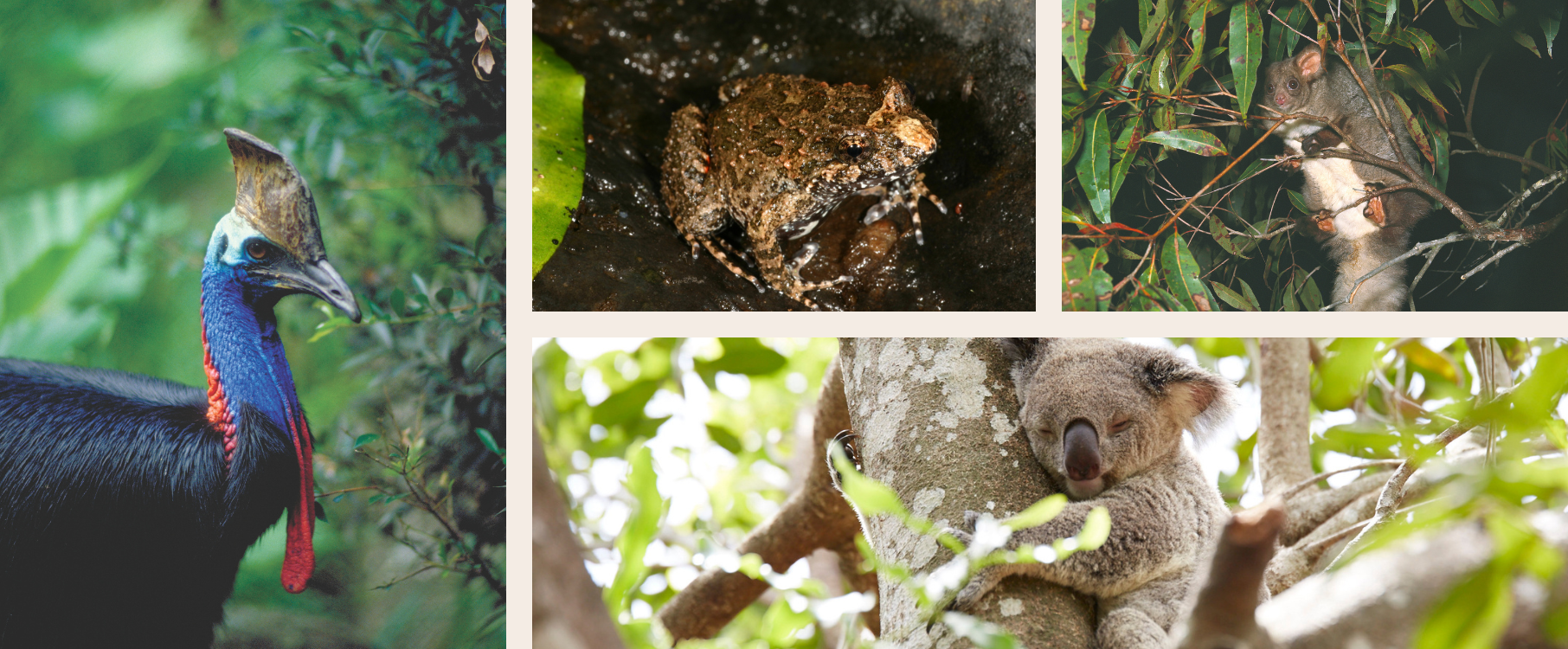
Forest reserve transitions to national park is helping protect threatened species including the southern cassowary, tusked frog, greater glider and koala.
Photo credit: Cassowary: Darren Jew © Queensland Government; tusked frog: Harry Hines © Queensland Government; greater glider: © Queensland Government; koala: Maxime Coquard © Tourism & Events Queensland
More than a map change
Behind every forest reserve was an enormous amount of work.
Comprehensive assessments were undertaken for all areas to determine the most appropriate tenure and included assessments of:
- ecological values
- native title
- timber interests
- leases and permits
- grazing
- apiary sites
- electrical and water infrastructure
- horse trails
- roads and access issues
- community and recreational use
- resource interests.
Regional teams carried out extensive consultation and planning to shape tenure recommendations and future management strategies.
Community consultation and working groups were formed and hundreds of organisations participated, including:
- local councils
- recreational groups
- conservation groups
- Traditional Owners
- graziers
- park visitors
- beekeeping organisations.
Many internal stakeholders were involved too, including the Department of Primary Industries, HQPlantations, Department of Natural Resources and Mines, Manufacturing and Regional and Rural Development, Energy Queensland, Powerlink and others.
In other words, it meant diligently working through how land is used, valued and managed—and choosing the right long-term outcome for each place.
Challenges along the way
As with any process spanning more than two decades, the journey wasn’t always straightforward.
Progress was shaped by both external and internal challenges, including complex land uses, competing interests, staffing and resource constraints, and changes in government and policy.
The original agreement was discontinued in 2012 following a change of government, before being reinstated in 2015.
Despite the various challenges, a huge effort was made in 2005-06 reducing the number of forest reserves from 169 to 113, and again in 2014-15 reducing the number of forest reserves from 97 to 38, with only 70,000 hectares left to go.
The final chapter
The end came on 20 November 2025, when the final 23 forest reserves were approved for transfer and the Nature Conservation (Forest Reserves) Regulation 2000 was repealed.
Work on the final amendment began in 2024 and after countless meetings, emails, briefing notes, spreadsheets, flow charts and diagrams and over 100 permits and authorities dealt with, the forest reserve tenure finally came to an end.
The final dedications added about 28,500 hectares to national parks across Queensland, helping protect endangered regional ecosystems and habitat for threatened species, including:
- koala in Danbulla National Park
- northern greater glider and spotted-tailed quoll in Dinden National Park
- tusked frog and glossy black-cockatoo in Eungella National Park
- black-breasted button-quail and squatter pigeon in Wrattens National Park
These additions also improved connectivity and management across several protected areas, strengthening Queensland’s conservation network for the future.
 Open larger image
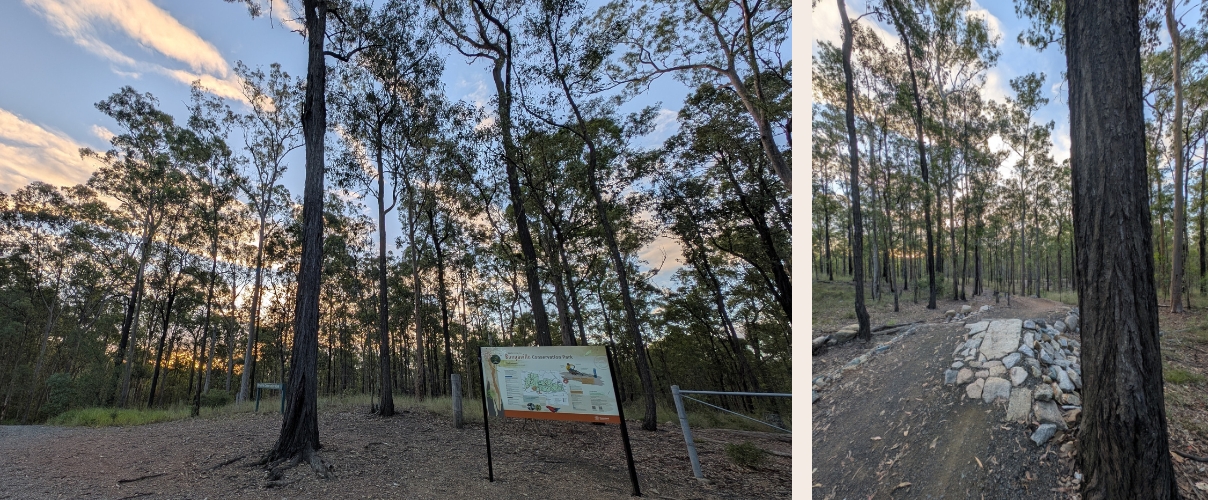
Bunyaville transitioned from a forest reserve to conservation park in 2009.
Photo credit: © B Hicks
The final tally
When the process concluded, the outcomes across the original 225 forest reserves were substantial:
- around 913,500 hectares were dedicated as national parks
- around 141,000 hectares were dedicated as conservation parks
- around 142,000 hectares reverted to State forest
Together, these figures reflect a careful, considered process—to determine the most appropriate long-term tenure for each parcel of land.
A lasting achievement
Forest reserve tenure was always intended as a transitional tool—a bridge between existing land uses and long-term protected area outcomes.
Its conclusion in 2025 closed a remarkable chapter in Queensland’s conservation history. Over nearly 26 years, forest reserves helped protect more than 1 million hectares of land, secure habitat for threatened species, improve landscape connectivity, and strengthen Queensland’s protected area system.
This achievement was made possible by the hard work, persistence and collaboration of countless people across government, communities, industries and conservation organisations.
And while forest reserve tenure has ended, its legacy lives on in the national parks and conservation parks it helped create—protecting Queensland’s natural heritage for generations to come.
To learn more about the Queensland Parks and Wildlife Service and its work, visit our park management webpages or follow us on social media:
Recent articles
-
Image credit Lindie Pasma © Queensland Government![An aerial view of the Channel Country between Bedourie and Boulia after two big wet seasons — greener than it has been in years.]() The fire after the flood in Munga-Thirri National Park
The fire after the flood in Munga-Thirri National Park
Issued 15 July 2026
Green and lush views of Munga-Thirri National Park show how much heavy rain has transformed it in the last couple of years. But that abundance…
-
Issued 19 June 2026
To implement planned burns effectively in diverse environments, QPWS uses aerial ignition to reach large or inaccessible areas at optimal times for burning.
-
Image credit Steve Browne © Queensland Government![]() 5 things you didn’t know you could do at David Fleay Wildlife Park
5 things you didn’t know you could do at David Fleay Wildlife Park
Issued 19 June 2026
Tucked away in the heart of Burleigh Heads, just 15 minutes from Gold Coast Airport, 25 minutes from Surfers Paradise, and a little over an…