Queensland Parks and Wildlife Service (QPWS) works collaboratively with a range of dedicated partners, experts and communities to deliver effective fire management and planned burns in Queensland’s publicly protected areas including national parks, state forests, conservation parks, resources reserves and timber reserves.
On average, QPWS carries out more than 400 planned burn activities every year, treating about 630,000 hectares of Queensland’s national parks and forests.
Guided by the Queensland Bushfire Plan and QPWS Fire Management Strategy, the QPWS fire management program aims to:
Effectively manage bushfire risks to minimise impacts on life, property, cultural landscapes, the natural environment and key values; and
Apply fire strategically to maintain healthy ecosystems, biodiversity and cultural landscapes while protecting life, property, and key values.
First Nations partners
QPWS acknowledges First Nations peoples’ management of fire across their Country over millennia. First Nations peoples’ culture, heritage, knowledge and values are intrinsically connected to Country and are a central consideration for the management of parks and forests, and all aspects of QPWS fire management
QPWS often works with Traditional Owners and Indigenous rangers to carry out planned burns and bushfire response operations in protected areas, and undertake post-fire recovery and value assessment activities.
Read more about First Nations knowledge and practices.
Government partners
Queensland Fire Department (QFD)
The Queensland Fire Department (QFD) is the State’s lead agency for bushfire hazards under Queensland’s disaster management arrangements. The Queensland Bushfire Plan outlines the responsibilities of QPWS in supporting QFD in managing the bushfire hazard across Queensland.
QPWS Rangers work with rural fire brigades to ensure we meet our shared responsibilities at the community level where people are most affected by bushfire. QPWS is a member of all relevant bushfire management committees at local, district and state level to support the management of bushfire risk in a coordinated and collaborative approach.
Rural Fire Service Queensland (RFSQ)
As part of QFD, the RFSQ supports QPWS with rural brigades that assist in planned burns and wildfire response. They also engage with local communities to promote fire safety and preparedness
The RFSQ is made up of approximately 28,000 volunteer members who make up the 1,400 rural fire brigades and 2,400 fire warden districts, ensuring community safety and enhancing community resilience.
Learn more about the work they do.
Queensland Health
QPWS works closely with Queensland Health to support and inform the community on what actions to take to protect their health during a smoke event from either a planned burn or a bushfire.
The ideal weather conditions required for planned burns can result in smoke lingering until the weather changes and winds and or atmospheric conditions assist in dispersing the smoke.
View the current smoke and dust levels in your area here.
Understand what these smoke and dust levels may mean for you here.
Local government
QPWS works with various local governments with fire planning, public information, and delivery of planned burns and bushfire response. Often Council and QPWS managed areas are contiguous and managed in a consistent way for fire.
Find your local council to learn more about their role in your area.
Lessees and Neighbours
QPWS works with over 900 lessees primarily on forests across Queensland. Fire is the responsibility of both QPWS and the lessee in these situations as the owner and occupier of land. Lessees are important partners for QPWS including for their important knowledge, resources and ability to respond quickly to bushfires when they occur.
Fire management is a shared responsibility that does not stop at the park or forest boundary. Active collaboration with neighbours is often critical to deliver outcomes and reduce bushfire risk on both sides of the fence. Understanding vegetation condition and bushfire risk across landscapes is invaluable in planning and implementing effective fire management on parks and forests.
QPWS fire personnel work closely with park neighbours and lessees under the Good Neighbour Policy to manage shared bushfire risks. Through joint planned burn activities, maintenance of shared assets like fence lines and firelines, and other collaborative strategies, this partnership helps reduce bushfire threats, protect communities, and support the health of landscapes.
If you live near a national park or forest, find out what you can do.
Utilities and infrastructure providers
QPWS works with a diverse range of providers of critical community infrastructure and assets such as roads, electricity, gas, water and communications. QPWS works with these entities across all phases of fire management on the principals of shared responsibility in ensuring the reliable supply of these services to the Queensland community.
Many utility providers have their own fire management teams and QPWS collaborates with these teams to undertake joint planned burns and mechanical treatments that help to reduce bushfire risk to these important assets.
Community groups and volunteers
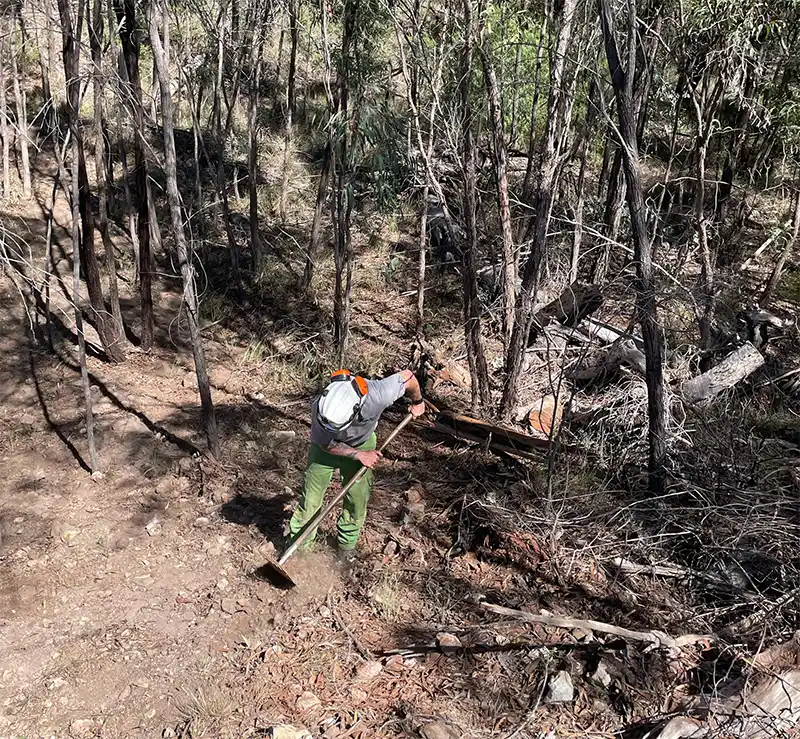
QPWS fire-trained Ranger preparing for planned burn at Western Creek State Forest
Community members and volunteer groups play an essential role in supporting fire management activities. Shared responsibility can include local conservation or other organised group doing a range of activities such as raking fuels away from important habitat trees.
A great example near Rockhampton is the Old Guys Restoring Ecosystems (OGREs) volunteer group that assists QPWS with fire management activities, including preparing for planned burns and maintaining vegetation along firelines. Their hands-on support helps ensure fire management programs are delivered effectively and efficiently across the state.
Read about QPWS and OGREs working together to protect vulnerable bat species and biodiversity at Mount Etna Caves National Park.
Bureau of Meteorology (BOM)
Fire behaviour in any given vegetation is heavily dependent on a combination of climate cycles and weather conditions. QPWS works with the Bureau to support the location of weather stations and to share intelligence relevant to fire weather across Queensland.
Climate and weather factors inform fire danger ratings (AFDRS), which then provides additional information for QPWS to consider in the delivery of planned burns and in responding to bushfire. Weather and fuel (the vegetation) are the two critical factors that sustain fire once it starts.
If you plan to visit a park or forest, or if you live near one, it is important to have knowledge of current weather conditions.
The BOM Weather App offers live, local and trusted notifications for severe weather conditions, including fire risk.