Planned burns, and the wider fire management strategies they fit into, are complex. QPWS planned burn operations are tailored to achieve the best outcomes for Queensland’s many different ecosystems and landscapes, while building bushfire resilience.
Our fire management approach is grounded in evidence, based on national best practice and builds on a millennia of First Nations land management practices while evolving to address contemporary environmental and social needs in a changing climate.
Most Queensland ecosystems and species have adapted to survive fire, or they need fire to reproduce or regenerate. This means that actively managing fire, rather than excluding it, is crucial to maintaining and protecting Queensland’s environment, its Cultural values and its communities.
QPWS uses planned burns for ecological purposes to maintain healthy ecosystems, biodiversity, and for the conservation of native species and habitats by introducing fire into the landscape in a way that benefits it.
How fire benefits the landscape
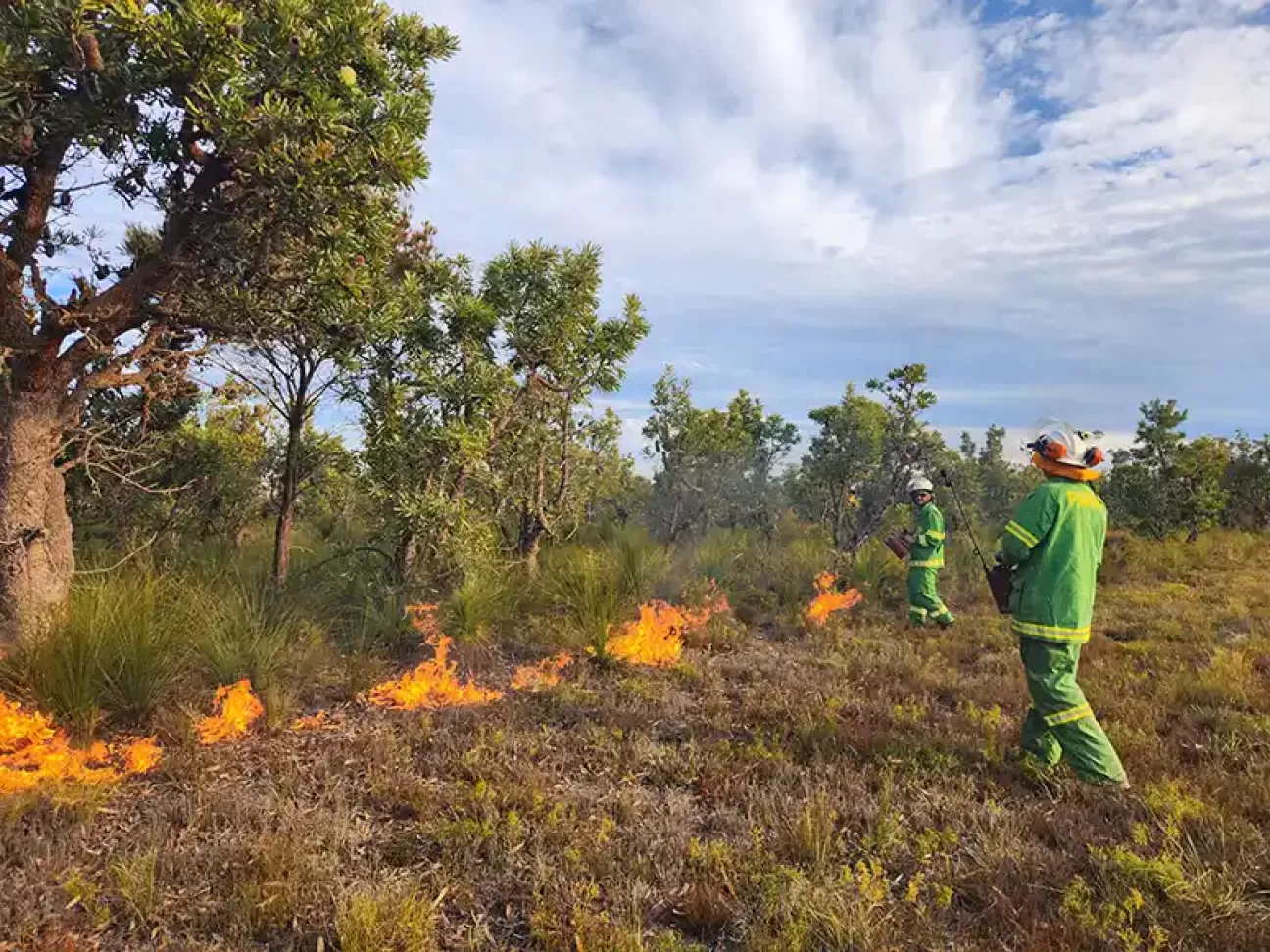
A QPWS planned burn in a fire-adapted coastal landscape in Bribie Island National Park, Southeast Queensland.
Fire plays a critical role in health and evolution of Queensland’s various landscapes. First Nations people have used the considered application of fire to achieve a range of desired outcomes for many centuries, greatly influencing Queensland’s biodiversity.
Most Queensland ecosystems are fire-adapted and, at times, fire-promoting, featuring plant species with adaptations or traits that allow them to survive fire and/or need fire to regenerate, while some are fire-sensitive and need fire excluded from them.
Not all landscapes, ecosystems and species respond to fire the same way under the same conditions. Understanding the relationship between fire and Queensland's many different ecosystems, plants and animals is a crucial factor that fire-trained Rangers consider when deciding why, when, where and how to undertake planned burns in our protected areas.
How do we know when and where to do planned burns?
Understanding fire regimes
Fire frequency, seasons in which fires occur, fire intensity and fire type make up an area’s fire regime, which influences the structure, composition and function of fire-adapted ecosystems.
By understanding an area’s fire regime through examination of these factors, we can tailor the frequency and delivery of planned burns to suit the needs of the environment and bring fire-adapted ecosystems into prescription, meaning they’re receiving the type and frequency of fire that they need to thrive.
The bigger picture – environmental, Cultural and social considerations
QPWS fire-trained Rangers assess a wide range of factors before commencing a planned burn to achieve the best results for that protected area and surrounding communities.
Planned burns are prioritised by considering the flora, fauna and vegetation communities, the type of fire an area needs, fire history, First Nations peoples’ knowledge and aspirations, park neighbours’ needs, surrounding land uses and accessibility of the protected area, and protecting park values and bushfire risk management objectives.
Other factors that can influence when, where and how planned burns occur on QPWS estate include recent and previous fire activity, seasonal conditions, available resources, neighbouring land uses and other activities that may be happening on or near the park.
All of these considerations help us determine the objectives of our burns, how often we introduce fire into an area, under what burn conditions, the tactics we use including on-ground ignition or broadscale aerial burning, other treatments such as fireline management, collaboration opportunities , required resources and community notification activities.
Leading up to a planned burn
Before doing a burn, fire-trained Rangers assess weather conditions including humidity, wind and ambient temperature, fuel type and fuel load to achieve the best outcomes, particularly where assets need protection and consideration.
We review our planned burn program every year, and specific burns can be planned for months or sometimes years in advance.
 2. Planning
- 03:35
- Transcript available
Collaborations and planning commence, with annual burn plans created for all protected areas we manage across the State. Even once all the plans are in place, finding ideal weather windows is the biggest component to…
Environmental outcomes
Planned burns are one of the best tools we have to achieve key conservation outcomes across Queensland’s more than 13-million-hectare protected area network.
Planned burns help us to maintain and improve ecosystems and ecological processes, provide suitable habitat for many native and threatened species, manage weeds and pest animals and protect fire-sensitive communities and species.
Learn more about how planned burns help Queensland’s unique plant and animal species.