Things to do
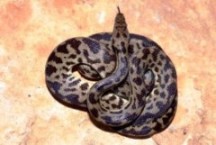
The national park is a refuge for many animal species including this spotted python.
Photo credit: Queensland Government
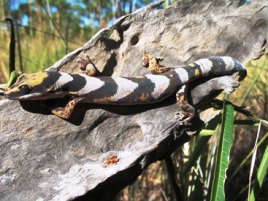
Northern velvet geckoes are one of the 51 reptile species found in the national park.
Photo credit: Eleanor Collins © Queensland Government
Camping and accommodation
White Mountains National Park offers camping at Canns Camp Creek camping area. Facilities include a toilet (non-flush), fire rings are provided at some camp sites. Access is via Poison Valley Road and suitable for 4WD vehicles driven with care. During the wet season (usually November to April), the road may be boggy and inaccessible. Find out more about camping in White Mountains.
Camping permits are required and fees apply.
- Book your campsite online.
- If you cannot book online, see camping bookings for other options.
Other accommodation
Other accommodation facilities, including hotels, camping and caravan parks, can be found at Pentland, Torrens Creek, Hughenden and Charters Towers. For more information see the tourism information links.
Scenic drives
Map
Adventure off the bitumen and take a scenic drive along Poison Valley Road to the Sawpit Gorge lookout or Poison Valley, the road is unsealed and suitable for 4WD vehicles only. Heed all park signage and expect to share the road with pedestrians, cyclists and other vehicles. Remember to follow the Parks and forests four-wheel drive with care guidelines.
Access in not permitted to the adjacent private property. Roads into to the national park may be inaccessible during the wet season. See park alerts for up-to-date information.
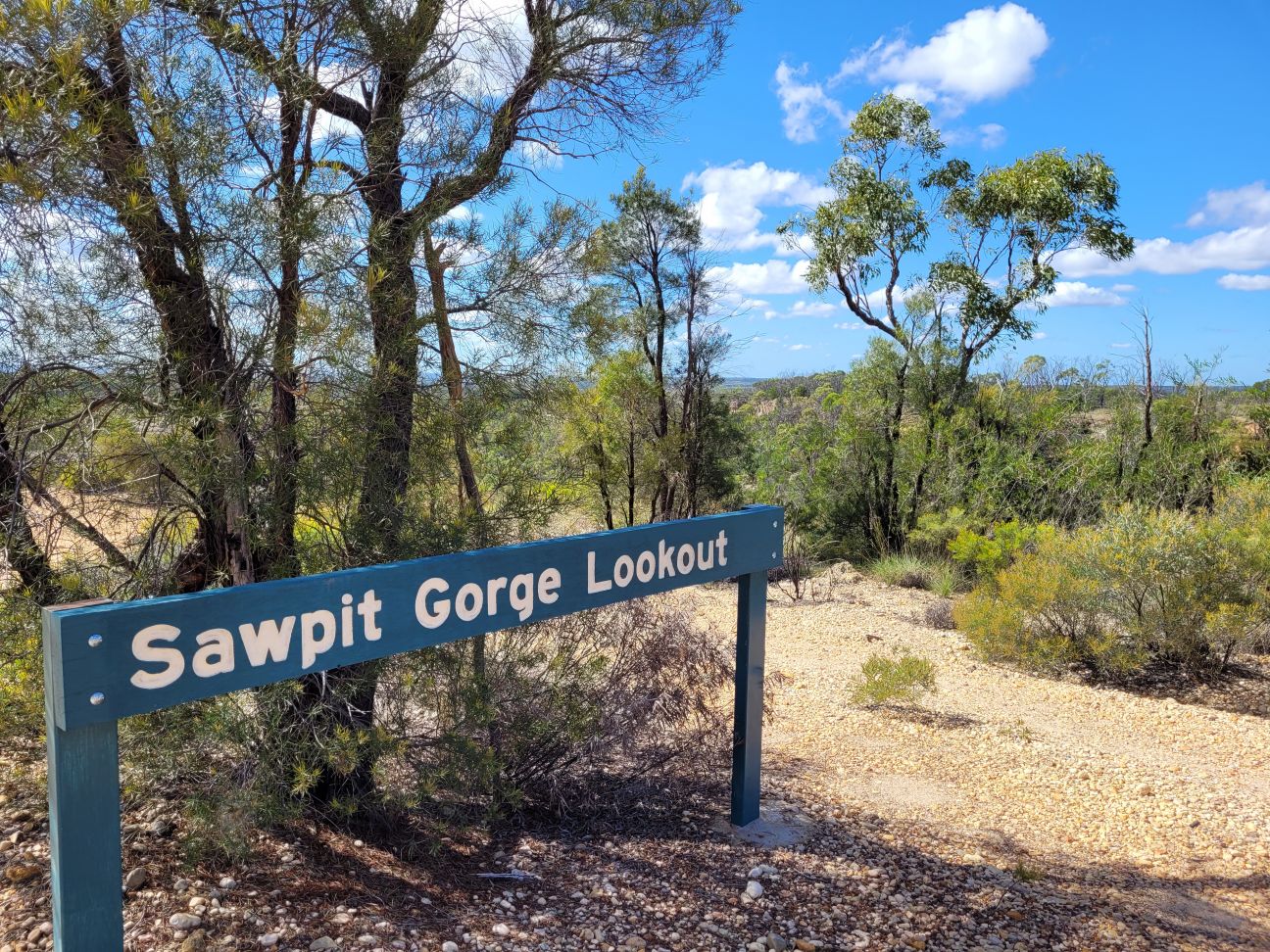 Open larger image
Catch a stunning view out across the sandstone landscape from Sawpit Gorge lookout.
Photo credit: Linda Thompson © Queensland Government
Sawpit Gorge lookout
Distance: 8km return from park entrance
Time: allow 30min driving time
Details: Pass by a landscape of sandstone heath plant communities and large deposits of lateritic stone on the way to Sawpit Gorge lookout. The drive can be particularly picturesque when the national parks’ native plants are in flower—from May to September. Sawpit Gorge is the headwaters of the Warrigal Creek system, which flows into the Cape River and then the mighty Burdekin River.
Poison Valley
Distance: 28km return from the national park entrance
Time: allow 1.5hr driving time
Details: Travel through open eucalyptus woodland, acacia scrub and heath surrounded by the rugged hills that form part of the Torrens Creek catchment on the drive out to Poison Valley. The valley takes its name from the heart-leaf poison bush Gastrolboum grandiflora that is common in the area. This plant contains the poison mono sodium fluroacetate, more commonly known as 1080. The road ends above the banks of Torrens Creek, the most northerly stream running into Lake Eyre.
Cycling
Map
You can cycle along Poison Valley Road from the Flinders Highway to Sawpit Gorge lookout or Poison Valley. The unsealed road is sandy, so expect the cycling to be hard going. Cyclists share the road with vehicles and pedestrians. Cycling is not permitted on any of the management tracks, firebreaks or adjacent private property.
Remember to follow the Parks and forests cycle with care guidelines.
Access to the park may be closed during the wet season. See park alerts for up-to-date information.
Picnic and day-use areas
Stop for a picnic at the Burra Range lookout on the Flinders Highway, where the highway crosses the Great Dividing Range. The stunning views are typical of the national park—steep gorges, lancewood forests and white sandstone shelves and peaks. Sheltered picnic tables and rubbish bins are provided at the lookout by the Department of Transport and Main Roads.
Viewing wildlife
White Mountains National Park is one of Queensland’s most botanically diverse parks, encompassing 14 regional ecosystems including two classed as endangered. Approximately 430 plant species contained in 10 vegetation communities have been identified on the park. Eucalypt, acacia and melaleuca woodlands, and a mass of heathland species dominate the vegetation.
About 30 plant species, normally affiliated to southern Queensland, have also been recorded in the national park. White Mountains National Park is the northern extremity of their range.
The park is a haven for a variety of wildlife, especially reptiles, which are well suited to the rocky landscape. Fifty-one species of reptiles have been recorded in the national park. Some may be seen sunning themselves on rocks or branches, relying on the sun’s heat to warm their bodies. The rocky outcrops and spinifex grasslands provide perfect homes for frilled lizards Chlamydosaurus kingi, and spiny knob-tailed geckos Nephrurus asper.
See the description of the national park's natural environment for more details about White Mountains' diverse wildlife.
- There are currently no park alerts for this park.